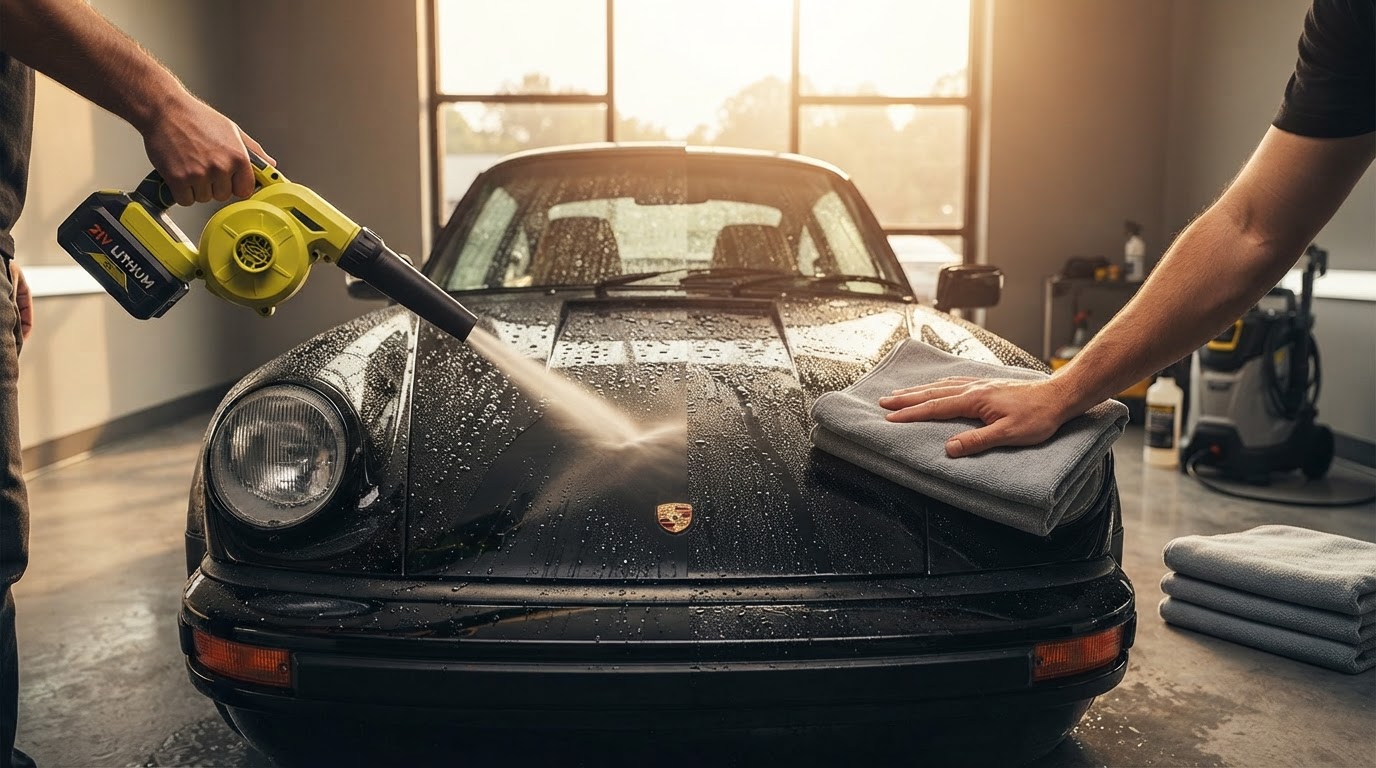
Contactless Air Drying vs. Microfiber Towels: Preventing Water Spots and Swirls
Choosing between manual towel drying and forced air drying is a major decision for vehicle care. Understanding how forced air car dryer vs microfiber towel methods stack up helps you maintain a flawless finish.
Microfiber Towels vs. Forced Air Drying
Microfiber towels rely on direct absorption. You push or drag the fabric across wet vehicle panels to soak up water. Forced air drying uses high-velocity airflow for fast drying, sweeping water off hydrophobic surfaces without touching the paint.
Paint Safety and Swirl Prevention
Photo by cottonbro studio on Pexels
- Microfiber Towels: Even clean towels carry friction. Pushing a towel across paint risks trapping airborne dust, creating fine scratches and swirl marks.
- Forced Air: Touchless drying completely eliminates paint contact. Without physical friction, scratch risks disappear.
Drying Speed and Crevice Performance
- Microfiber Towels: Towels excel on large flat panels like hoods, but cannot access mirror housings, lug nuts, or front grilles. Trapped moisture later runs down clean panels, leaving hard water stains.
- Forced Air: High-velocity airflow is strong enough to clear water from panels, mirrors, door jambs, and hard-to-reach areas in seconds.
Versatility and Daily Convenience

Photo by Daniil Ustinov on Pexels
Air drying tools offer multi-purpose functionality. For example, the Jet Blower is a powerful, cordless 21V detailing tool designed to dry your car and clear debris in seconds. It comes as a complete kit including the blower unit, battery, charger, ear plugs, and a hard carry case. Beyond vehicle care, it cleans garage floors, outdoor furniture, keyboards, and engine bays.
Verdict: Which Drying Method Wins?
While microfiber towels are useful for quick touch-ups, contactless air drying is superior for protecting paint and preventing water spots.Read the full guide: The Complete Guide to Preventing Water Spots on Your Car