Selecting a Jet Blower for Precision Maintenance
 Priya RamanSenior Analyst
August 22, 2026. This analysis examines the technical specifications and mechanical requirements of modern mini jet dry blower tools. It is intended for consumers seeking high-velocity airflow solutions for delicate maintenance and rapid drying tasks.
To evaluate the utility of a mini jet dry blower, think of it as a matrix of airflow velocity and thermal management. Two axes matter here: the rotational speed of the internal turbine (measured in RPM) and the sustained discharge pressure. When these factors are aligned, the tool transitions from a simple fan to a precision instrument capable of displacing water from intricate automotive crevices or clearing debris from sensitive electronics without physical contact. According to the technical review from 69toolz, these portable handheld units are engineered to significantly reduce drying times while maintaining a form factor that allows for high maneuverability in tight spaces.
In the context of modern maintenance, the problem is often one of accessibility and surface tension. Traditional compressed air canisters are limited by finite volume and cooling effects that can introduce moisture back into the system. Conversely, full-sized leaf blowers lack the directional accuracy required for interior detailing or electronic dusting. The mini jet dry blower fills this gap by utilizing high-RPM brushless motors to generate a continuous stream of dry, high-velocity air. This is particularly relevant when considering specialized applications, such as using a jet fan blower for snow removal on vehicle sensors or delicate exterior trim where physical brushing might cause micro-abrasions. Once you see it this way, the shift toward high-performance turbine tools becomes a logical progression in tool kit optimization, moving away from static pressure toward dynamic airflow.
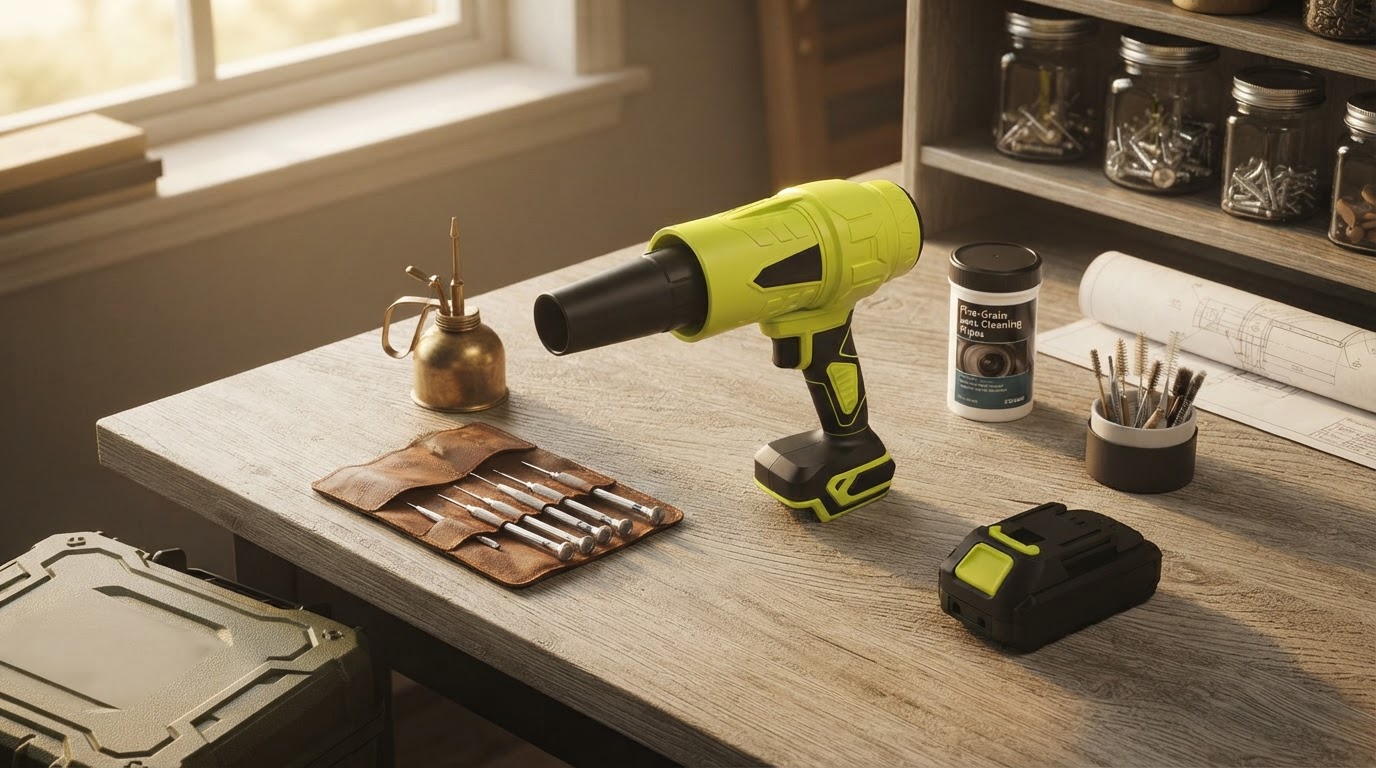
The Jet Blower addresses these mechanical requirements through a high-specification internal architecture. The device utilizes a motor capable of reaching 110,000 to 130,000 RPM, a threshold that allows for the displacement of heavy debris and stubborn water droplets. As noted in the documentation for the Mini Hand Powerful Jet Blower on eBay, this 110,000 RPM capability is paired with a "violent key" or turbo mode that provides immediate bursts of maximum airflow. This burst capacity is critical for overcoming the surface tension of water on ceramic-coated vehicles or clearing particulate matter from deep-seated heat sinks in computer hardware.
Thermal stability is the second pillar of the Jet Blower's design. High-RPM motors generate significant heat; however, the integration of advanced speed controllers ensures that the device can operate without overheating during extended use. Amazon.be reports that these units often feature three distinct wind speed settings, with high-end models reaching a maximum output speed of 125,000 RPM while maintaining stable power delivery. This stability is essential when the tool is repurposed for seasonal tasks, such as when a jet fan blower for snow removal is used to clear light powder from walkways or porches. The ability to maintain consistent output without thermal throttling allows the user to complete larger tasks that were previously outside the scope of mini-blowers. By balancing the power-to-weight ratio, these tools provide a level of utility that bridges the gap between household cleaning and professional-grade automotive detailing, ensuring that the jet fan blower for snow removal remains effective even in colder ambient temperatures where battery efficiency and motor resistance are tested.
Establishing a decision framework requires an understanding of the relationship between motor speed and practical application. The decision rule: prioritize RPM and battery discharge rates over aesthetic features if the primary use case involves heavy moisture removal or large-scale debris displacement. For users focused on electronics, the ability to toggle between lower speed settings is more valuable than peak velocity to avoid damaging delicate components. When integrated into a broader maintenance strategy—including the use of a jet fan blower for snow removal during winter months—the tool must demonstrate versatility across varying air densities and temperatures.
Before finalizing a selection, evaluate the following criteria:
- Motor Velocity: Ensure the unit reaches at least 100,000 RPM to provide sufficient force for water displacement.
- Speed Variability: Look for at least three speed tiers to handle both sensitive electronics and heavy-duty drying.
- Thermal Management: Verify the presence of stable power circuitry to prevent overheating during continuous operation.
- Portability and Ergonomics: The unit should be balanced for one-handed operation to facilitate use in tight automotive or household spaces.
- Multi-Season Utility: Confirm the airflow is concentrated enough for specialized tasks like using a jet fan blower for snow removal on small surfaces.
Sources

Photo by Mercedes Matzm on Pexels
- This Jet Fan Blower Is Just Ridiculous!
- Mini Hand Powerful Jet Blower Powerful Jet Dry ...
- Portable Hand Held Powerful Jet Dry Mini Super Jet Blower