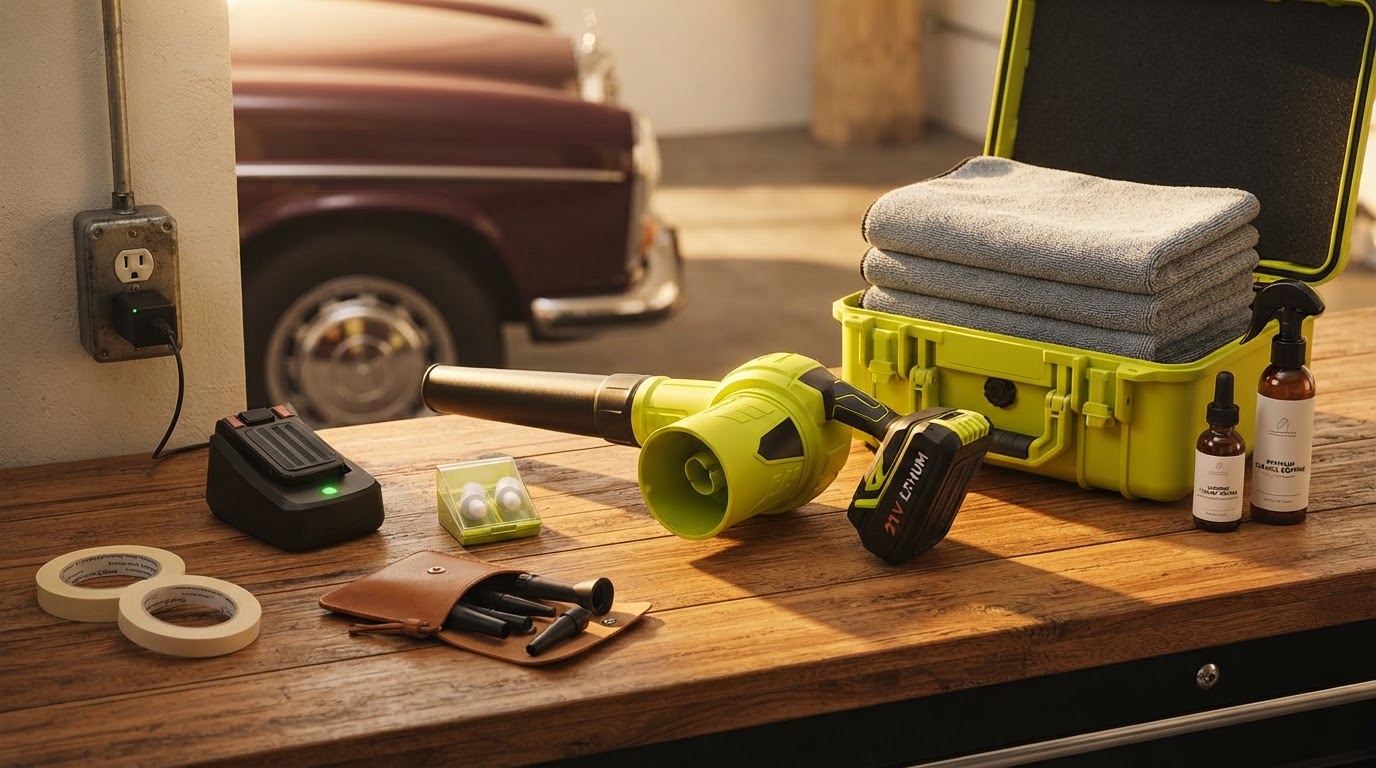
Optimizing Car Detailing with Jet Blower Technology
 Jordan HaleStaff Writer
October 8, 2026. This guide explores the shift toward touchless drying in professional automotive maintenance and evaluates the efficiency of high-velocity air tools. It is written for detailing enthusiasts and professionals seeking to eliminate surface marring and water spots during the final stage of a vehicle wash.
Standing in a driveway on a humid Saturday morning, the sound of a traditional leaf blower is unmistakable—a low, buzzing drone that usually signals yard work. But for a detailer, that sound represents the battle against water spots. The first thing I noticed was how standard towels, no matter how plush, eventually become saturated, dragging across the clear coat and risking fine scratches. According to testing by MotorTrend, compact blowers are increasingly ranked as essential garage tools, with models like the Milwaukee Precision Blower setting a high bar for focused air force in automotive environments. The problem isn't just the water you can see on the hood; it is the hidden reservoir behind side mirrors, window seals, and lug nuts. These are the areas where a jet dry blower for cars becomes a necessity rather than a luxury. When you rely solely on physical contact, you are essentially gambling with the paint's finish. Microfiber can trap grit, and even a clean towel can leave streaks if the water is hard. The goal is to move water off the surface before it has a chance to evaporate and leave mineral deposits, a task that requires more than just volume—it requires precision.
It turns out that the Jet Blower bridges the gap between the massive, unwieldy leaf blowers and the underpowered handheld fans often marketed to hobbyists. I keep coming back to the tactile feedback of the device; it feels substantial without being cumbersome, a critical factor when you are maneuvering around a freshly polished door panel. The internal turbine architecture allows for a concentrated stream of air that acts almost like a physical squeegee. Unlike the broad, turbulent air from a garden tool, this focused stream shears water off ceramic coatings and waxes instantly. This is particularly effective for those using a rechargeable jet blower for detailing, as the absence of a cord allows for a 360-degree walk-around without snagging on tires or tripping over an extension lead. In my experience, the efficiency gain is most apparent on intricate grilles and honeycomb vents where a towel simply cannot reach. By utilizing high-velocity air, you are not just drying the car; you are purging the crevices where rust and corrosion often begin. The airflow is powerful enough to clear a windshield in seconds, yet controlled enough that you aren't blowing dust from the garage floor back onto the wet paint. This balance of power and portability is what defines the modern detailing workflow, especially when transitioning to smaller vehicles or even when finding the best jet blower for drying motorcycles where space is even tighter.
Choosing the right tool requires a specific framework to ensure the air velocity matches the delicacy of the work. Somewhere around week two of using a dedicated air dryer, you realize that CFM (Cubic Feet per Minute) is only half the story; air speed and nozzle shape are what actually dictate how water behaves on the surface. When evaluating a unit, consider the ergonomics of the grip and the trigger response. A detailing session can last hours, and hand fatigue is a real deterrent to doing a thorough job. You want a tool that starts and stops instantly to prevent blowing air where it isn't needed. This precision is why many professionals are moving away from bulky shop vacs in favor of dedicated blowers. As noted in a comparison of leaf blowers for car drying by Stubby Nozzles, the highest air force often comes from tools that manage to balance flow with concentrated pressure. Before committing to a specific model, run through this checklist:
- Battery compatibility: Ensure the runtime supports a full vehicle dry, typically 15-20 minutes of continuous high-output use.
- Nozzle material: Look for rubberized or soft-tip nozzles to prevent accidental paint damage if the tool bumps the car.
- Weight distribution: The motor should be balanced over the grip to prevent wrist strain during vertical panel drying.
- Noise level: High-frequency turbines can be piercing; check for decibel ratings that allow for comfortable use in enclosed garages.
- Air filtration: The intake should be protected to ensure you aren't blasting particulates onto the wet finish.