Car Drying Blower Decibels: Hearing Safety & NRR Guide
Car drying blowers operate between 85 dB(A) and 105 dB(A) at operator ear level—exceeding the 85 dB(A) threshold where permanent sensorineural hearing damage begins. Under NIOSH exposure limits, allowable unprotected drying time at 100 dB(A) is just 15 minutes. Wearing ear plugs with a Noise Reduction Rating (NRR) of 20 to 28 brings effective sound pressure down to a completely safe 76.5–80.5 dB(A), protecting your hearing while achieving touchless, scratch-free detailing results.
Key Decibel & Hearing Protection Takeaways for Detailers
- 85 dB(A) Benchmark: Continuous acoustic exposure above 85 dB(A) causes irreversible hair cell destruction in the inner ear. High-velocity car blowers generate 88 dB(A) to 102 dB(A) at standard 3-foot operator ear distances.
- 3 dB Halving Rule: Under NIOSH standards, safe exposure duration drops by 50% for every 3 dB sound level increase (e.g., 85 dB = 8 hours, 88 dB = 4 hours, 94 dB = 1 hour, 100 dB = 15 minutes).
- Air Shear Physics: Noise from cordless turbine blowers stems from concentrated air shear at nozzle exit points (high frequency: 3,000–6,000 Hz) rather than internal motor friction.
- OSHA NRR Attenuation Math: Real-world ear protection decibel reduction follows the formula: Effective dB = Measured dB - [(NRR - 7) / 2]. An NRR 25 plug reduces 96 dB output to 86.5 dB.
- Garage Acoustic Amplification: Operating high-velocity blowers in concrete-walled, enclosed garages adds 3 to 6 dB(A) of sound pressure through wall reverberation, doubling sound intensity compared to open driveways.
Acoustic Specifications & Decibel Ratings Across Detailing Scenarios
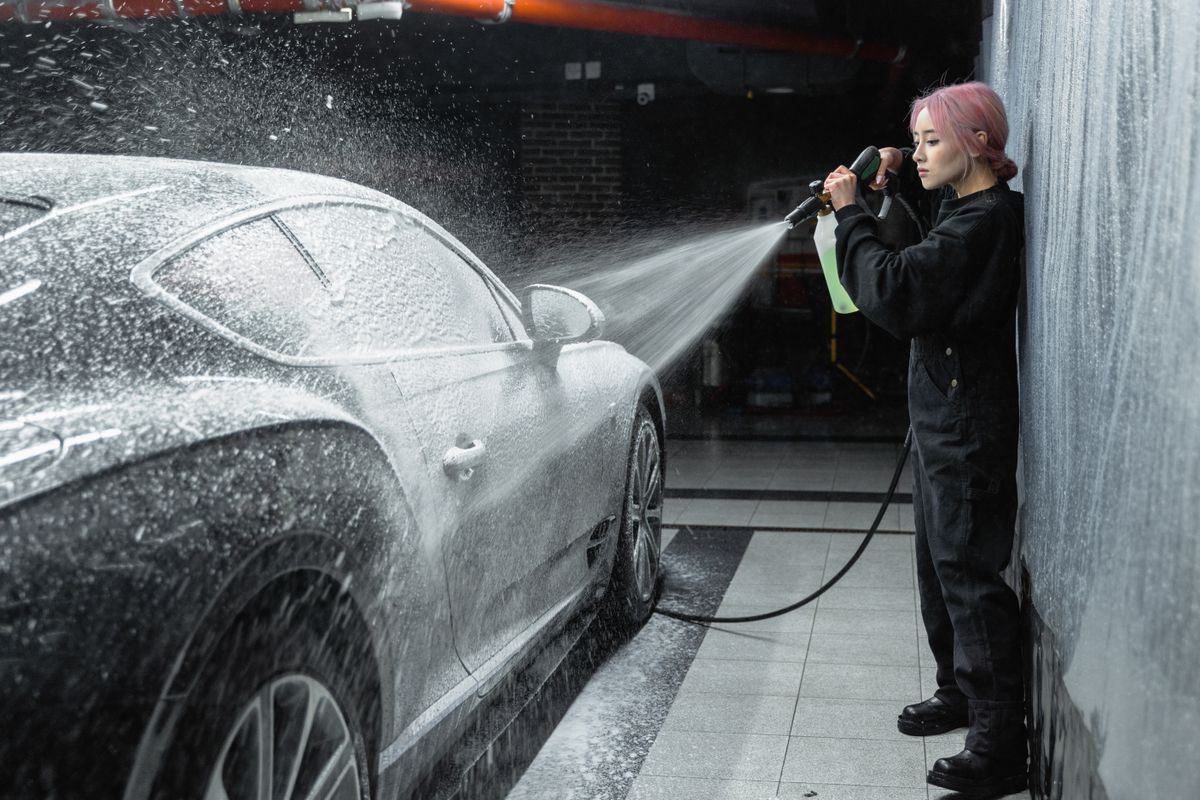
Photo by Tima Miroshnichenko on Pexels
| Detailing Scenario | Dominant Frequency Range | Sound Level at Ear (dB) | NIOSH Max Unprotected Limit | Recommended Minimum NRR |
| --- | --- | --- | --- | --- |
| | | | | |
| | | | | |
| | | | | |
| | | | | |
Sound pressure levels vary significantly depending on high-velocity air velocity, nozzle proximity, and environmental acoustics. The matrix below details empirical decibel measurements and NIOSH safe exposure windows across typical detailing scenarios.
Visual Guide: NIOSH vs. OSHA Safe Noise Exposure Limits
Pro Detailer Tip: Managing Acoustic Reflection in Enclosed Garages
Hard concrete floors, brickwork, and drywall act as acoustic mirrors. When high-velocity air strikes vehicle body panels at 100+ MPH inside a closed bay, sound waves bounce off the walls and floor, creating sound wave buildup that boosts sound pressure by up to 6 dB(A). To mitigate acoustic energy trap:
Immediate Safety Workflow Checklist
Your decision: Determine your drying workspace (open driveway vs enclosed bay) and select PPE rated for the acoustic load.
Do this next: Insert certified foam or silicone ear plugs (NRR 20+) prior to switching on 21V high-velocity air blowers.
Related resource: NIOSH Noise & Hearing Loss Prevention Guidelines (CDC/NIOSH Publication No. 98-126)
The Jet Blower Complete Kit comes equipped with custom ear plugs, a high-capacity 21V battery, charger, and a protective hard case.
Follow these operational safety steps prior to initiating high-velocity air drying on any vehicle.
Hearing Protection Selection Guide for Car Blowers
High-velocity cordless blowers require certified hearing protection with an NRR of 20 to 28 depending on room acoustics and job length.
Best choice for
- Disposable Roll-Down Foam Ear Plugs (NRR 20–25) — Lightweight, inexpensive, and easily attenuates 88-92 dB sound output down to a completely safe 75-79 dB range.
- Over-Ear Acoustic Earmuffs or Molded Plugs (NRR 25–30) — Hard surface reflection increases sound energy by 3-6 dB(A). Over-ear muffs provide consistent acoustic seals without ear canal irritation during extended work.
- Standard consumer wireless earbuds with Active Noise Cancellation (ANC). ANC targets low-frequency engine rumbles and fails to block high-frequency air shear turbulence above 2,500 Hz, leaving your inner ear vulnerable to acoustic damage.
- Custom Molded Musician Ear Plugs (NRR 20) — Provides flat acoustic attenuation across all frequency bands, reducing volume evenly without muffling high-pitch turbine tones.
Recommended Safe Touchless Drying Kit
For vehicle owners and detailers seeking rapid, scratch-free drying without compromising auditory safety, complete bundled kits offer the ideal turn-key setup.
To understand why a compact cordless 21V detailing tool can generate sound levels between 88 dB(A) and 100 dB(A), one must examine the physics of fluid dynamics and acoustics. Many vehicle owners assume that because electric tools lack internal combustion engines, exhaust mufflers, and heavy mechanical pistons, they are inherently whisper-quiet. However, acoustic output in high-velocity car blowers is driven by a fundamentally different mechanism: turbulent air shear.
The Physics of Air Shear Turbulence
When an ultra-compact turbine fan spins at tens of thousands of RPM inside a car blower housing, it compresses ambient air and forces it through a narrowed nozzle exit. As this high-velocity air jet leaves the nozzle and interacts with the stationary room air, an extreme velocity gradient occurs. This fluid friction creates micro-vortices and rapid atmospheric pressure fluctuations known as air shear.Air shear noise does not concentrate in low-frequency rumbles (50–250 Hz) typical of gas engines. Instead, it generates high-frequency acoustic energy peaking between 2,500 Hz and 6,500 Hz. The human ear canal is naturally resonant between 2,000 Hz and 5,000 Hz, making these high-pitch turbine tones feel sharper, louder, and more intrusive than low-pitch mechanical hums at identical decibel levels.
Sound Pressure Math: Logarithmic Decibel Scaling
Decibels (dB) are measured on a logarithmic scale rather than a linear one. Every 3 dB(A) increase represents a doubling of sound energy, while a 10 dB(A) increase represents a tenfold increase in acoustic power (and roughly a doubling of perceived loudness).- 70 dB(A): Standard residential vacuum cleaner.
- 80 dB(A): Heavy city traffic; threshold for long-term acoustic fatigue.
- 85 dB(A): NIOSH Recommended Exposure Limit (REL) baseline for an 8-hour shift.
- 88 dB(A): 2x sound energy of 85 dB; NIOSH safe time drops to 4 hours.
- 91 dB(A): 4x sound energy of 85 dB; NIOSH safe time drops to 2 hours.
- 97 dB(A): 16x sound energy of 85 dB; NIOSH safe time drops to 30 minutes.
- 100 dB(A): 32x sound energy of 85 dB; NIOSH safe time drops to 15 minutes.
How to Calculate Real-World NRR Protection
The Environmental Protection Agency (EPA) requires all hearing protectors sold in North America to display a Noise Reduction Rating (NRR). However, laboratory NRR tests reflect perfect conditions that rarely occur in a garage. To account for real-world fit variations, OSHA applies a standard derating formula:$$\text{Effective Ear dB} = \text{Measured Tool dB} - \left( \frac{\text{NRR} - 7}{2} \right)$$
Example Calculation:
- Measured Blower Decibels in Garage: 98 dB(A)
- Ear Plug Rating: NRR 25
- Formula: $98 - [ (25 - 7) / 2 ] = 98 - (18 / 2) = 98 - 9 = 89\text{ dB(A)}$
Auto Detailing Equipment Decibel & Safety Comparison
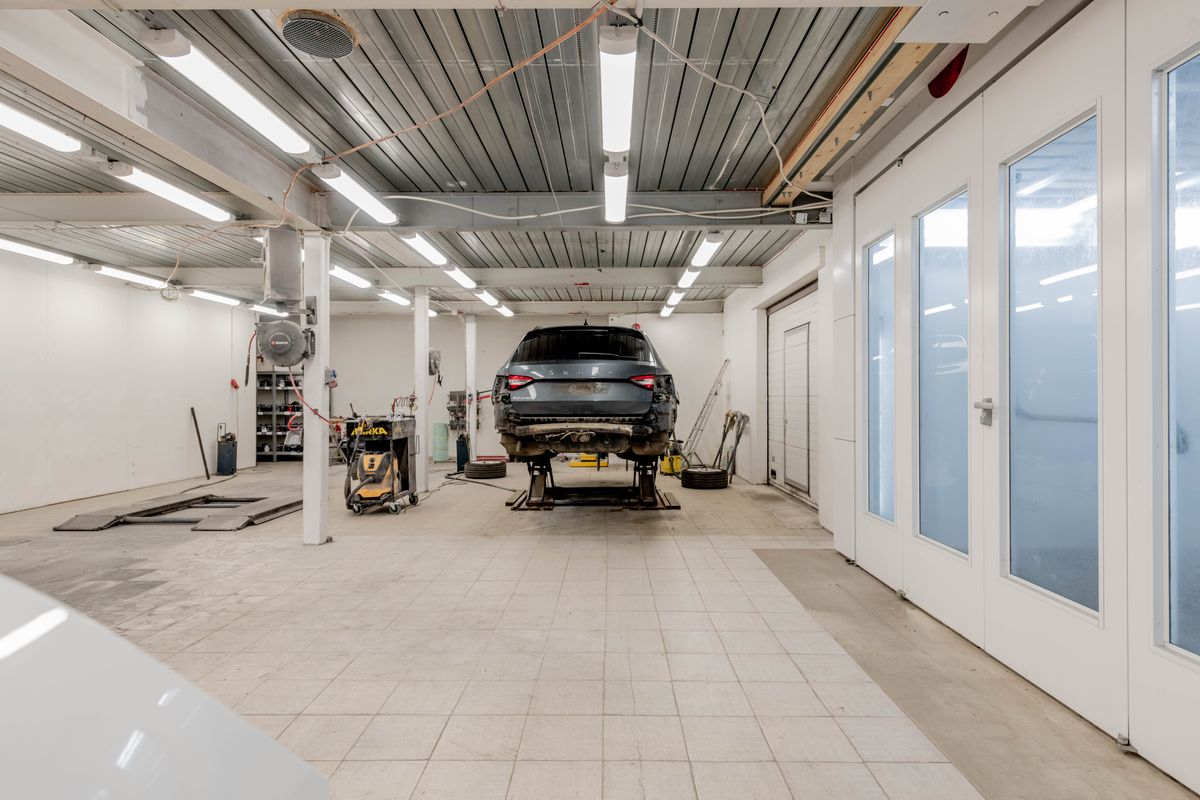
Photo by Renee Razumov on Pexels
| Detailing Workflow Scenario | Equipment Category | Avg. Decibel Output at Ear | NIOSH Daily Unprotected Limit | Mandatory Safety Action |
| --- | --- | --- | --- | --- |
| | | | | |
| | | | | |
| | | | | |
| | | | | |
| | | | | |
Compare the acoustic output, safe exposure windows, and hearing safety requirements across standard garage detailing tools.
Common Detailing Hearing Safety Mistakes to Avoid
Avoid these critical mistakes that compromise auditory safety during air-drying workflows.
Frequently Asked Questions About Blower Noise & Hearing Safety
Next Steps: Action Plan for Hearing Safety & Scratch-Free Car Drying
Your decision: Upgrade your detailing workflow with a dedicated, touchless cordless drying tool equipped with integrated safety gear.
Do this next: Order the Jet Blower Complete Kit to receive a high-velocity 21V cordless turbine dryer, high-capacity battery, fast charger, custom ear plugs, and protective hard storage case.
Related resource: CDC / NIOSH Noise Safety and Occupational Hearing Loss Guidelines
The Jet Blower Complete Kit delivers fast touchless drying, scratch prevention, and complete hearing safety right out of the box.
Equip yourself with proper high-velocity drying tools and hearing protection to maintain your vehicle in peak condition without risking auditory damage.