How to Safely Dry an Engine Bay Without Microfiber Towels
Safely dry an engine bay without microfiber towels by waiting until the engine is cool, then using a cordless 21V jet blower to push rinse water off covers, creases, and weather traps. A 2.5 lb Jet Blower at 130,000 RPM can work the bay contactless so cloth is not stuffed into belts, pulleys, or connectors. Wear the included ear plugs, keep the nozzle at a standoff, and stop short of flooding electrical plugs. Towels snag; air does not.
Why towels are the wrong engine-bay dryer
A microfiber in an engine bay becomes a snag, a lint source, and a grit applicator. It catches on belt ribs, hood props, and cable ties. It wipes dust across a painted cover and leaves fibers on a dipstick. Contactless air avoids that contact.
The bay is not a hood panel. There are connectors, sensors, and openings that should not be packed with cloth. Blowing standing water off a cool engine after a careful rinse is the job. Packing a towel into a fuse-box lip is not.
If the bay was never meant to be soaked, do not create a flood just to have something to dry. A light rinse of greasy covers, then air, is different from a pressure-washer bath.
Cool, cover, then blow
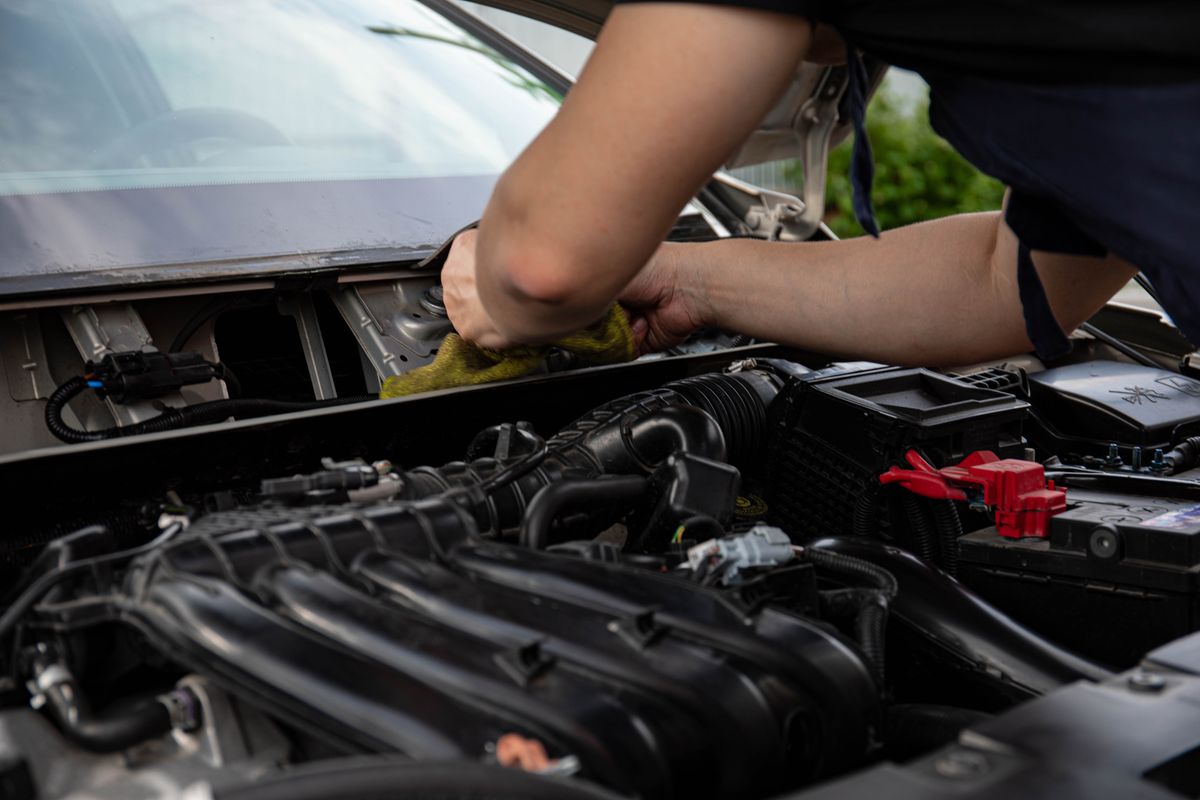
Photo by Sergey Meshkov on Pexels
Park, wait until the engine is cool to a cautious hand near (not on) metal, and disconnect convenience loads if the work is a full wash. Cover sensitive open connectors if they are not already capped. Then rinse gently if the plan is a wash, or skip rinse if the plan is only dust.
Use the 21V jet blower at a standoff. 130,000 RPM is a fast stream. It can move water off a valve cover and out of a cowl. It can also drive water into an unclipped plug if the nozzle is jammed into a gap. Hold back. Sweep. Let air do the displacement.
The guide to cleaning electronics with a jet blower is the caution sheet for boards and sockets. Treat under-hood electronics with the same standoff, not with a closer blast because the bay looks rugged.
Spend the 15-20 minute pack on water, not on showing off
Runtime is 15-20 minutes. Start at the top of the bay: underside of the hood, cowl, then covers, then the front edge above the radiator support. Water runs down. Do not dry the oil-fill area first and then flood it from the cowl.
Keep the 2.5 lb body off hot manifolds by waiting for cool. A light tool still should not rest on plastic covers. Two hands if needed; nozzle never used as a pry bar.
Wear ear plugs. The kit is 85-95 dB, and a bay concentrates sound. Do not skip PPE because the session is shorter than a full-car dry.
Engine-bay drying methods
| Method | Risk | Use | | --- | --- | --- | | Microfiber stuffing | Snags, lint, grit wipe | Avoid in belts and connectors | | Compressed shop air | Tank moisture, high force | Only with dry air and skill | | Canned air | Short, cold, costly bursts | Tiny connectors, not a bay | | 21V jet blower, 2.5 lbs | Can drive water if jammed in | Cool bay, standoff, sweep | | Sun only | Leaves trapped water | Follow-up, not the whole dry |
What not to do in a bay
Do not blow a hot engine. Thermal shock on some plastics and a burned housing are both possible. Do not aim a high-velocity stream down an open intake, an unclipped connector, or a fresh air box with the lid off.
Do not use a leaf blower. Bay work is a compact nozzle job. A yard blast throws grit into alternators and cowl drains. Do not follow a pressure-washer flood with optimism; if the bay was soaked aggressively, drying air cannot undo water that is already inside a connector.
After the pass, leave the hood open in a dry place so remaining films evaporate. Start the engine only when the bay is a dry workspace, not a mist chamber. The jet blower paint and trim safety FAQ still applies to painted covers in the bay.
Towel-free engine-bay drying checklist
Photo by Sergei Starostin on Pexels
- [ ] Wait until the engine is cool.
- [ ] Cap or avoid open connectors; do not flood them.
- [ ] Use a 2.5 lb 21V jet blower at a standoff.
- [ ] Work hood underside and cowl before lower covers.
- [ ] Wear ear plugs at 85-95 dB.
- [ ] Skip towels in belts, pulleys, and fuse-box lips.
Frequently asked questions
Can an engine bay be dried with a towel if the blower is not available?
A towel on a large painted cover is less bad than stuffing cloth into belts. Air is still the safer crevice tool. Do not pack microfiber into connectors.
Is the jet blower safe for under-hood electronics?
Use a standoff and do not drive water into plugs. The tool is a dryer, not a waterproofing system. See electronics-dusting cautions for sockets and boards.
Should the battery stay connected while blowing the bay?
A cool, parked car with accessories off is the usual drying setup. Follow the vehicle maker if a wash procedure says otherwise. Do not spray electrical packs with water to begin with.
Is 15-20 minutes enough for a bay?
A bay is smaller than a whole car. One charged 21V pack is enough for a careful sweep if the rinse was light. It is not enough to undo a pressure-washer flood.
Can the same blower dry the paint afterward?
Yes if the intake stayed clean. Do dusty or greasy bay work after the paint dry, or wipe the housing before the next exterior pass.
Related reading
Electronics caution, paint safety, and post-wash blow drying sit next to this bay workflow.
- whether a jet blower can safely dry car paint and trim
- how to blow dry a car after washing
- jet blower maintenance for precision electronics
What to do next
Let the engine go cool. Charge the 21V pack. Put in ear plugs. Sweep the hood underside and cowl first, then covers, with the nozzle off the hardware. Leave the hood open to finish. Keep microfiber out of belts and connectors.
Cover photo by Sergei Starostin on Pexels.