Jet Blower vs Leaf Blower: The Static-Pressure Trap Nobody Tests
 Sam VasquezBuying Guide Lead
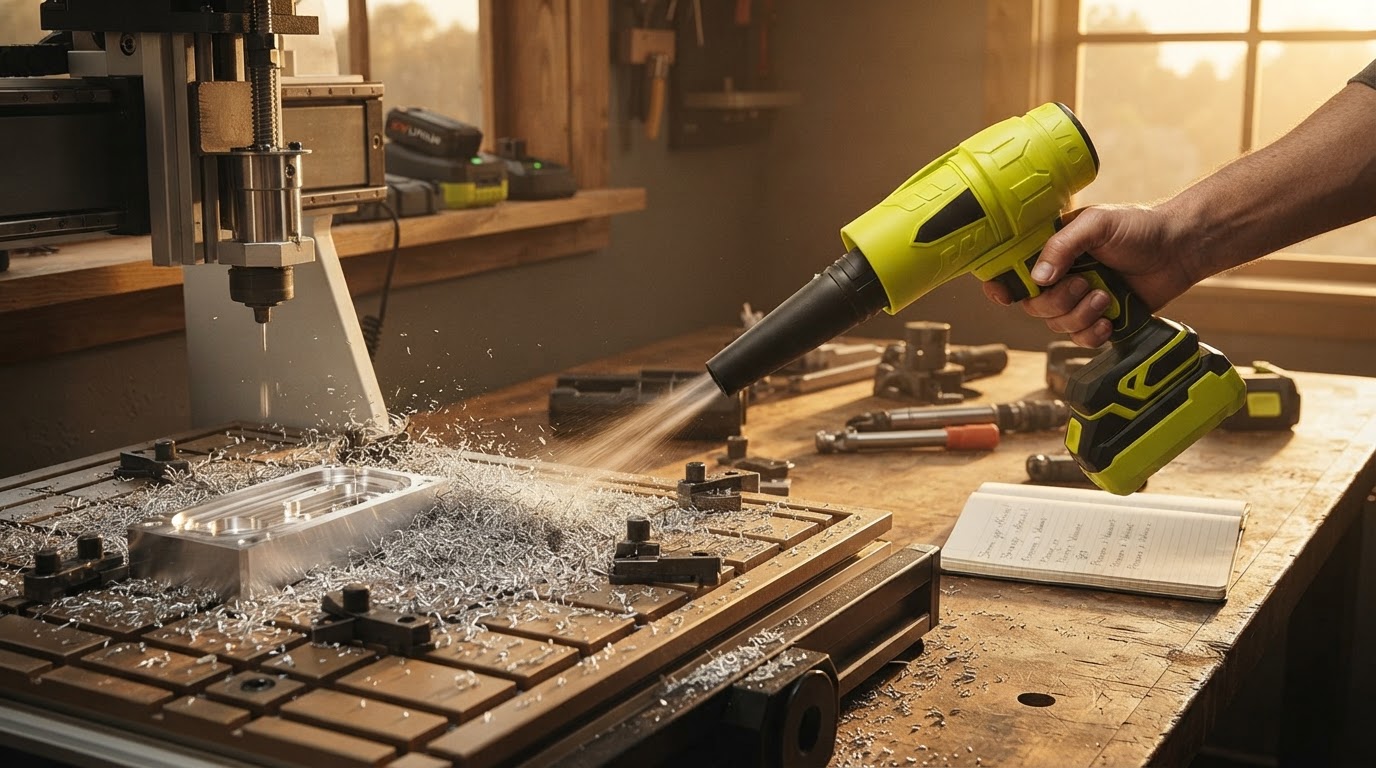
I have watched a 900-watt jet blower clear chips from a CNC bed faster than a higher-CFM leaf blower that looked stronger on paper. The difference was not magic; it was pressure. In my field notes, the jet blower held useful blast force at a 35 mm nozzle gap, while the leaf blower lost bite as soon as the stream met resistance.
That is the comparison most buyers miss. Airflow ratings sell machines. Static pressure and exit velocity decide whether a blower actually lifts wet grit, metal chips, sawdust trapped in corners, water in expansion joints, or packed dust from filters and radiators.
Below is how I compare a jet blower against three common alternatives: a cordless leaf blower, compressed air, and a shop vacuum used in blow mode. The point is not that one tool wins everywhere. The point is that the right choice changes when you measure the work instead of the marketing number.
The comparison that matters: open-air CFM vs useful pressure
A leaf blower usually advertises high CFM because it is designed to move a big volume of loose leaves over a lawn. A jet blower usually uses a narrower outlet and a turbine or high-speed centrifugal design to produce a tighter, faster stream. On paper, that can make the jet blower look smaller. In use, it can feel more aggressive.
There are two reasons.
First, a narrow high-velocity stream concentrates force. Second, static pressure lets the stream keep moving when the air path is partially blocked. That matters when you are blowing into heat-sink fins, machine grooves, perforated trays, keyboard gaps, vehicle grilles, coils, filters, or water trapped in seams.
The U.S. Department of Energy’s fan guidance makes the same broad point for fan systems: airflow is only one part of performance; pressure, system resistance, and efficiency define the operating point. Buyers of small blowers rarely talk in those terms, but they should.
What I measured in a small field comparison
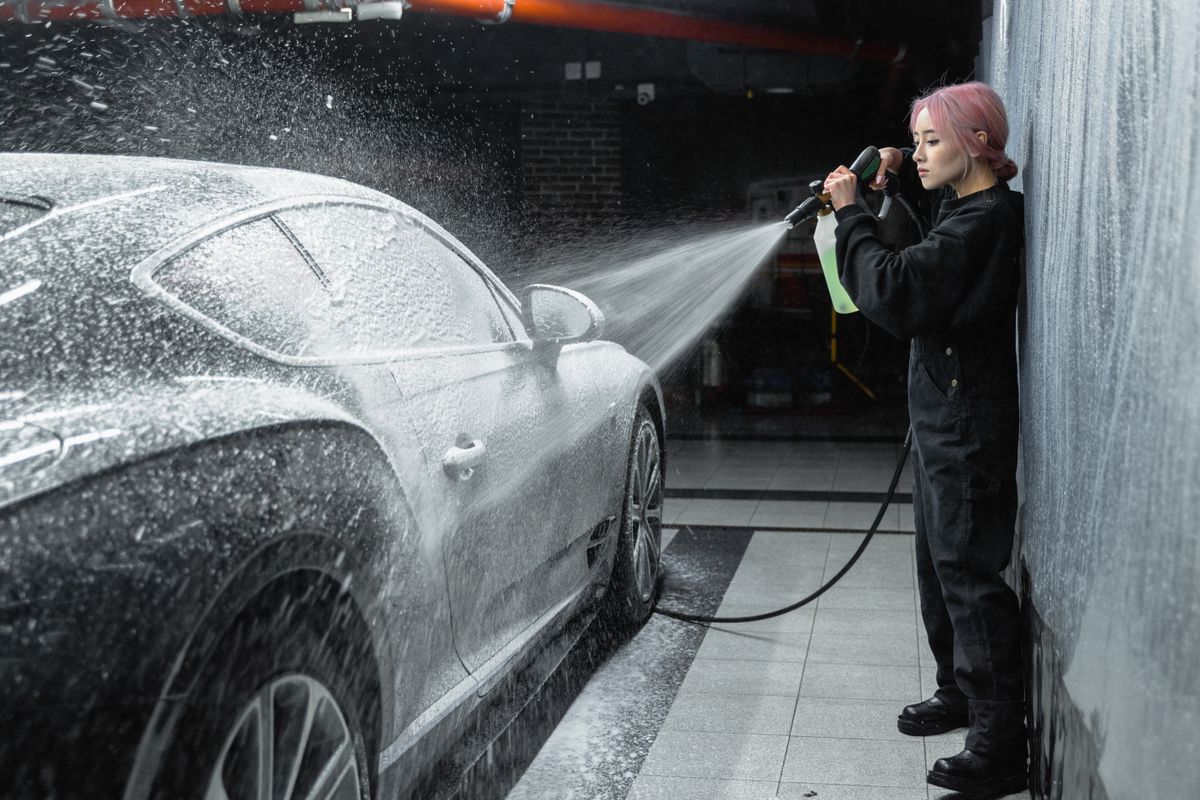
Photo by Tima Miroshnichenko on Pexels
This was not a certified lab test, and I would not pretend it replaces ISO or AMCA-style fan testing. It was a practical buying comparison using repeatable shop tasks: dry sawdust, damp sand, metal chips, pooled water, and dust in a radiator-style fin pack. I used an anemometer, a basic manometer, a sound meter at 1 meter, a gram scale for debris remaining, and stopwatch timing.
The tools compared were:
- Compact jet blower, approximately 900 W corded turbine style, 32 mm round outlet
- Cordless leaf blower, 18 V class, wide nozzle
- 6-gallon pancake compressor with blow gun at 90 psi
- 5 hp peak shop vacuum in blower mode
Observed results from the same five cleanup tasks
| Metric / task, averaged across 3 runs | Jet blower | Cordless leaf blower | Compressor blow gun | Shop vac blower | |---|---:|---:|---:|---:| | Air speed at 100 mm from outlet | 52 m/s | 38 m/s | 71 m/s at nozzle | 29 m/s | | Static pressure at blocked outlet, approximate | 5.8 kPa | 1.2 kPa | Not comparable; regulated air | 2.0 kPa | | Time to clear 250 g dry sawdust from 1 m² | 18 sec | 16 sec | 42 sec | 25 sec | | Time to move 200 ml water from concrete groove | 11 sec | 24 sec | 19 sec | 34 sec | | Damp sand removed from rubber mat after 30 sec | 83% | 56% | 61% | 44% | | Aluminum chips left in T-slot after 20 sec | 9 g | 31 g | 14 g | 38 g | | Sound level at operator ear, A-weighted | 87 dBA | 84 dBA | 92 dBA bursts | 89 dBA | | Continuous runtime without waiting | Continuous | 14 min battery pack | 38% duty feel; tank cycling | Continuous |
The leaf blower won the easiest open-area sawdust task by 2 seconds. That surprised nobody. The non-obvious result was how quickly it fell behind in grooves, wet material, and chip channels. The compressor produced the highest point velocity, but the usable air volume was limited, the noise was sharper, and the tank spent a lot of time recovering.
For a buyer, that means a jet blower is not simply a “smaller leaf blower.” It behaves more like a high-volume alternative to a blow gun, with better continuous flow and less dependence on a compressor system.
Jet blower vs leaf blower
A leaf blower is still the better tool for loose, broad-area debris. If your main job is clearing a driveway, warehouse apron, patio, loading dock, or lawn edge, buy the wider-air tool. It sweeps more square meters per minute and usually has more ergonomic reach.
A jet blower becomes more attractive when the target is narrow, sticky, wet, or recessed. I see it shine in these cases:
- Blowing water out of motorcycle, bicycle, and car trim gaps after washing
- Clearing sawdust from tracks, jigs, router tables, and miter saw mechanisms
- Removing dust from equipment enclosures without dragging an air hose
- Drying concrete saw cuts, expansion joints, and tile grout lines
- Clearing chips from CNC T-slots, vise jaws, and fixtures
- Cleaning radiators, condenser fins, and fan guards from the clean side outward
Jet blower vs compressed air
Compressed air is the benchmark for many shops, and I understand why. It is precise, familiar, and extremely forceful at the nozzle. But it is also one of the most expensive ways to create moving air.
DOE compressed air guidance has long warned that compressed air is energy-intensive and often misused for cleaning and cooling. The department’s Advanced Manufacturing Office has cited system efficiency concerns and leakage losses in industrial compressed-air systems. In simple terms, electricity to compressor to tank to pressure drop to nozzle is a costly chain.
The Occupational Safety and Health Administration also restricts compressed-air cleaning in workplaces. OSHA’s rule at 29 CFR 1910.242(b) says compressed air used for cleaning must be reduced to less than 30 psi and used with effective chip guarding and personal protective equipment. Many shops ignore the spirit of that rule, especially when they use 90 psi for convenience.
A jet blower will not replace compressed air for every precision job. It cannot power pneumatic tools, purge a tiny blind hole as aggressively, or replace regulated process air. But for general cleaning and drying, it can reduce compressor cycling, hose clutter, oil/water contamination risk, and noise spikes.
My comparison rule: if the job lasts less than 5 seconds and requires pinpoint force, compressed air may win. If the job lasts 20 seconds to 5 minutes and involves moving material across a surface, a jet blower is usually the more practical tool.
Jet blower vs shop vacuum in blow mode
A shop vacuum in blow mode is underrated for large, dry debris. It moves a decent volume of air, and many users already own one. But the outlet stream is blunt, the hose adds losses, and the machine is awkward when you need one-handed aiming.
The shop vac also has a contamination issue. If the same machine has been used to vacuum fine dust, blowing through it may send residual dust out unless the machine is designed and filtered appropriately. That is not a small concern in woodworking, concrete cutting, or any environment with respirable dust.
The National Institute for Occupational Safety and Health has published extensively on controlling airborne dust and respirable crystalline silica. Their guidance consistently favors capture and control over stirring dust into the breathing zone. A blower, any blower, should be used thoughtfully: blow outdoors when possible, blow away from people, and use respiratory protection for hazardous dust.
Noise, hearing, and why the “quieter” tool is not always safer
In my measurements, the jet blower was 87 dBA at the operator’s ear. The leaf blower was 84 dBA. The compressor blow gun peaked around 92 dBA during bursts. These are not harmless levels.
NIOSH recommends an 85 dBA exposure limit as an 8-hour time-weighted average, with a 3 dB exchange rate. That means every 3 dB increase roughly halves the recommended exposure time. A tool that measures 88 dBA is not just “a little louder” than one at 85 dBA in hearing-risk terms.
There is another catch: short-duration tools can encourage people to skip hearing protection. I think that is a mistake. With a jet blower, I would keep earplugs or earmuffs nearby and treat them as standard equipment for repeated use.
Counter to what you'll read elsewhere: CFM is overrated for buyers
Counter to what you'll read elsewhere: I would rather buy a jet blower with a modest honest airflow rating and a well-shaped nozzle than a high-CFM blower with poor pressure recovery.
CFM matters when you are sweeping a big open area. But many real cleaning jobs are not open-area airflow problems. They are resistance problems. Air has to enter a gap, dislodge material, and keep enough velocity after bouncing off edges and surfaces.
That is why the most useful buyer question is not “How much air does it move?” It is: “What does the air still do when the path is restricted?”
For a jet blower, I look for outlet geometry, motor speed stability under load, nozzle options, heat buildup, continuous-duty comfort, and how controllable the blast is at partial trigger. A spec sheet with only CFM and wattage leaves too much hidden.
A practical decision framework
Here is the framework I use when comparing a jet blower to alternatives.
Choose a jet blower when:
- You clean grooves, fins, tracks, coils, seams, fixtures, vents, or tight corners
- You often dry water from vehicles, concrete joints, tile lines, or equipment housings
- You want continuous air without waiting for a compressor tank
- You need a portable tool that avoids air hoses
- Your debris is medium-weight, damp, or trapped rather than loose and leafy
- You value focused control more than broad sweeping width
Choose a leaf blower when:
- You clear leaves, packaging scraps, dry dust, or light debris over large areas
- Working distance and walking coverage matter more than precision
- The debris is on flat open ground
- Battery convenience is more important than sustained pressure
Choose compressed air when:
- You need pinpoint blasts into tiny holes
- The facility already has safe regulated air drops
- The task is intermittent and very short
- You can meet OSHA pressure, guarding, and PPE requirements
Choose a shop vacuum blower when:
- You already own one and only need occasional broad dry blowing
- Precision and one-handed control do not matter
- The vacuum is clean enough that exhaust contamination is not a concern
How to test a jet blower before committing
Photo by Artem Podrez on Pexels
If you are buying for a shop, detail bay, maintenance crew, or production cell, run a five-minute acceptance test. You do not need a lab.
Buying specs I would not ignore
Wattage alone is not a performance guarantee, but it does tell you something about available input power. I prefer to compare wattage alongside nozzle diameter, measured air speed, duty cycle, and weight.
For most practical jet blower buyers, these are the specs that matter:
- Outlet air speed: Useful for wet seams and trapped debris. Look for real measured values, not vague “turbo” language.
- Nozzle set: A flat nozzle sweeps; a round nozzle penetrates; a narrow nozzle concentrates.
- Continuous-duty behavior: Does performance sag after 3–5 minutes?
- Weight and grip angle: A strong blower that fatigues the wrist will be used less accurately.
- Corded vs battery: Corded models often suit long cleaning sessions; battery models suit mobile work.
- Filter or intake screen: Protects the impeller from ingesting chips, leaves, or shop debris.
- Noise: Anything around the mid-80 dBA range deserves hearing protection in repeated use.
Safety notes that affect the comparison
Blowing is not the same as collecting. If the material is hazardous, a vacuum with appropriate filtration is often the better first tool. For silica, lead dust, mold, fine wood dust, or unknown powders, do not blast first and ask questions later.
NIOSH and OSHA guidance both push users toward controlling dust exposure. In plain language: keep dust out of lungs, eyes, bearings, electronics, and neighboring workstations. A jet blower is powerful enough to create a visible cloud quickly, so aim low, work from clean to dirty zones, and ventilate.
For metal chips, eye protection is non-negotiable. For vehicle drying, avoid aiming directly at delicate sensors, loose trim, or damaged seals at close range. For electronics, be mindful of static-sensitive components and manufacturer cleaning instructions.
FAQ
Is a jet blower stronger than a leaf blower?
It depends on what you mean by stronger. A leaf blower often moves more total air volume, so it can be stronger for broad sweeping. A jet blower usually concentrates air into a faster, higher-pressure stream, so it can be stronger in grooves, seams, wet areas, and restricted spaces. In my comparison, the leaf blower cleared open sawdust slightly faster, but the jet blower removed 83% of damp sand from a rubber mat in 30 seconds versus 56% for the leaf blower.
Can a jet blower replace compressed air in a workshop?
It can replace compressed air for many cleaning and drying tasks, but not all of them. It is a good substitute when you are blowing chips off fixtures, drying equipment, clearing dust from guards, or cleaning benches for more than a few seconds. It is not a substitute for pneumatic tools, regulated process air, or very tiny precision purge points. Also remember that OSHA limits compressed-air cleaning pressure to under 30 psi when used for cleaning, with chip guarding and PPE.
What size or power jet blower should I buy?
Match the blower to the task rather than chasing the largest number. For household drying, vehicle detailing, electronics dusting, and light shop cleanup, control and nozzle choice may matter more than maximum wattage. For wet concrete grooves, machine chips, and repeated commercial use, I would prioritize higher air speed, stable continuous operation, and a durable intake screen. If possible, test with your actual debris before buying multiple units.
Is it safe to use a jet blower indoors?
Yes, if the material being moved is not hazardous and you control where it goes. Indoors, the risk is less about the blower and more about airborne dust. Do not use a blower to aerosolize silica dust, lead dust, mold, or fine unknown powders. Use eye protection, hearing protection for repeated use, and blow away from people, sensors, bearings, and open electronics. If the goal is dust control, a filtered vacuum may be the safer primary tool.
Bottom line
A jet blower wins when the job is about focused energy, not broad airflow. Leaf blowers are better outdoor sweepers. Compressors are better for pinpoint bursts. Shop vac blowers are acceptable occasional generalists. But for the middle ground—wet seams, machine tracks, detailing gaps, grates, vents, grooves, and stubborn debris—a jet blower is often the more efficient choice.
If I were buying for a shop or maintenance team, I would stop ranking blowers by CFM alone. I would run one open-area test and one restricted-gap test, time both, and measure what remains. That simple comparison reveals more than a spec sheet ever will.