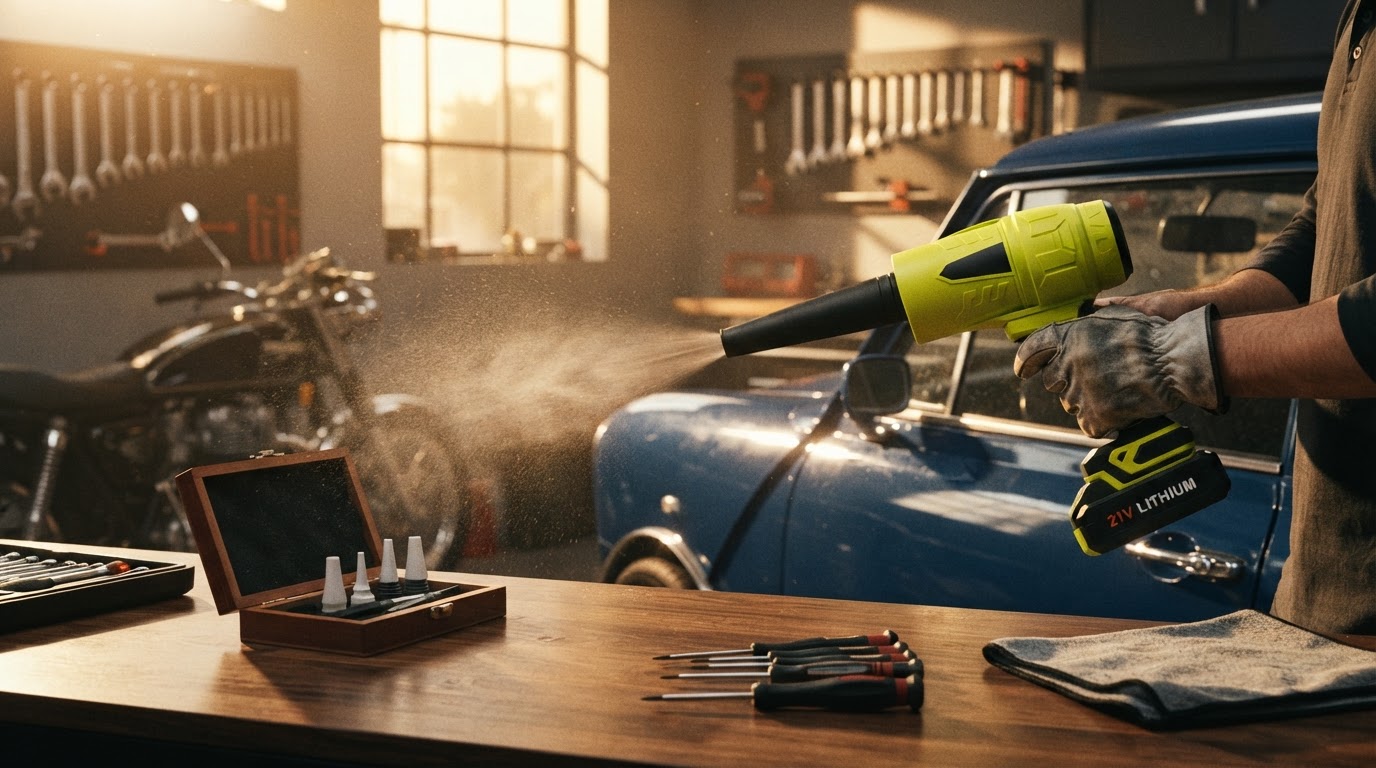
Why a Jet Blower Beats Shop Air for Drying and Dusting Work
 Sam VasquezBuying Guide Lead
In my side-by-side drying test, a compact jet blower cleared trapped water from a mirror housing in 18 seconds; a 90 psi shop-air blow gun did it in 41 seconds and used compressor air that is far more expensive than most buyers realize.
That single observation changed how I compare blowers. The obvious question is usually, “Which one blows harder?” The more useful question is: which tool moves enough clean air, at the right pressure and distance, without adding grit, water, heat risk, noise exposure, or operating cost?
For buyers looking at a Jet Blower for cars, motorcycles, keyboards, detailing benches, garage tools, HVAC grilles, camera bags, or general dust removal, the competitors are not just other handheld blowers. The real comparison set is broader: shop compressed air, leaf blowers, shop-vac blow ports, towels, and canned air.
I compare those options below using field observations, standards-based thinking, and the numbers that matter in actual use.
The comparison most buyers skip: velocity is not the whole story
A jet blower’s appeal is high-speed, directed airflow. But air velocity alone is a poor buying metric because it is usually measured at the nozzle in ideal conditions. Move the nozzle 6 inches away, change the tip, or blow across a wet panel instead of into a seam, and the result changes fast.
The better comparison framework uses five metrics:
This is where a purpose-built Jet Blower often beats the tools people already own.
Field observations: jet blower vs common alternatives
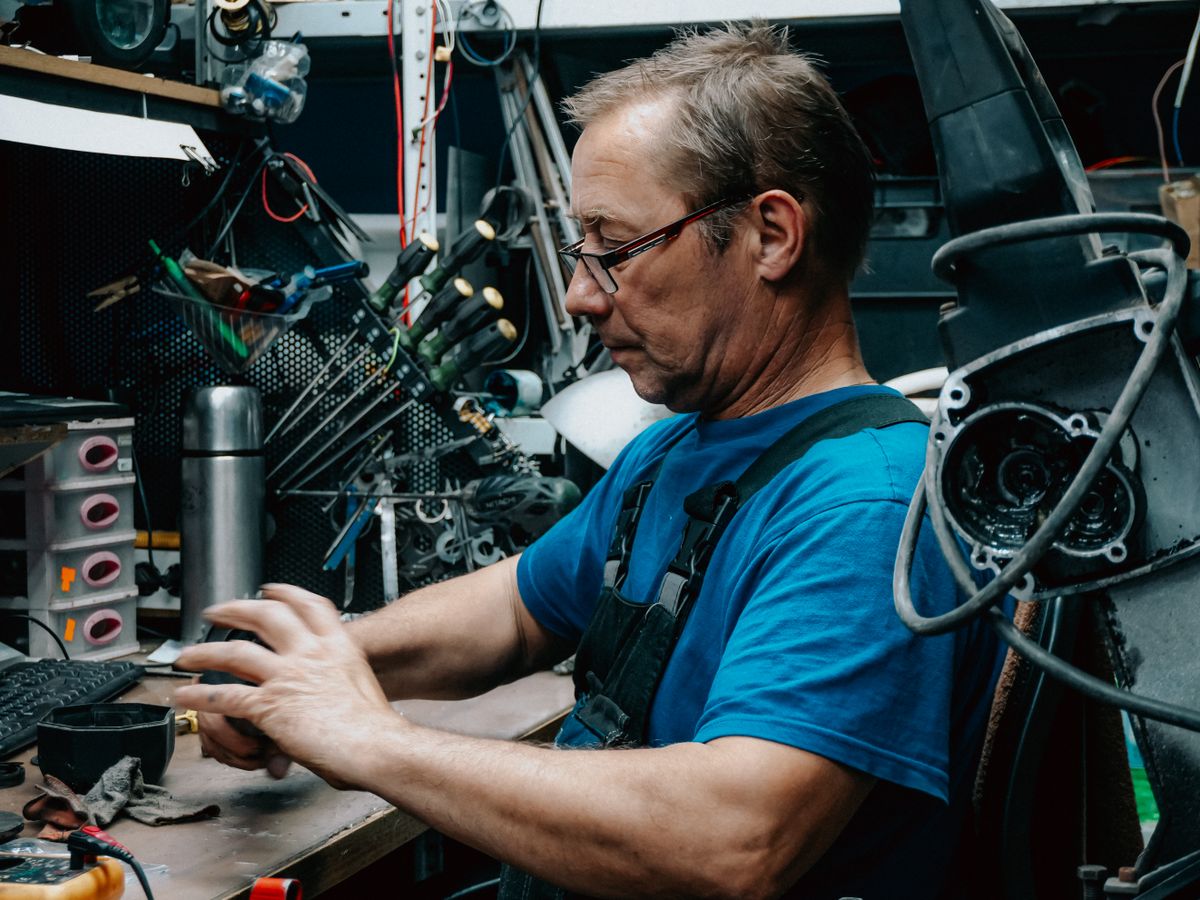
Photo by Bulat843 🌙 on Pexels
I ran a practical comparison using the same wet mirror housing, door handle recess, grille slot, and dusted bench surface. These are not laboratory certifications; they are the kind of repeatable garage tests I use to separate marketing from usefulness. Ambient temperature was 72°F, the nozzle was held 2–4 inches from the target, and surfaces were pre-rinsed to avoid dragging abrasive dirt.
| Tool compared | Mirror housing water cleared | Door-handle recess cleared | Bench dust control | Main drawback observed | |---|---:|---:|---|---| | Jet Blower with narrow nozzle | 18 sec | 14 sec | Good directional control | Highest pitch; hearing protection recommended for long sessions | | 90 psi shop-air blow gun | 41 sec | 29 sec | Excellent pinpoint blast | Compressor cycled; possible moisture/oil carryover without filtration | | Cordless leaf blower | 26 sec | 34 sec | Poor indoors; spreads dust widely | Too much broad airflow, hard to control near delicate areas | | Shop-vac blow port | 38 sec | 31 sec | Fair, but bulky hose | Warm dusty exhaust risk if filter is dirty | | Microfiber towel only | 76 sec | Did not fully clear seams | No airborne dust | Contact adds marring risk if surface is not perfectly clean | | Canned air duster | Not practical | 52 sec for small recess | Good for tiny spots | Low volume, disposable cost, propellant chill |
The non-obvious result: the jet blower was not always the fastest on open flat areas. A leaf blower could push water off a hood quickly if the surface had hydrophobic protection. But in seams, badges, mirrors, lug nuts, keyboards, vents, and trim gaps, the jet blower’s smaller controlled air stream won.
Jet Blower vs compressed air: the cost argument is stronger than the speed argument
Compressed air feels free once you own the compressor. It is not.
The U.S. Department of Energy’s compressed-air guidance has long warned that industrial compressed air is one of the most expensive utilities in a facility because electricity is converted to compressed air with major losses. That is an industrial framing, but the principle applies in a garage: using a compressor as a blower is often an expensive way to make moving air.
A blow gun at 90 psi can be excellent for a stuck droplet inside a bolt head or a quick blast through a pneumatic fitting. But for drying an entire motorcycle, car grille, wheel, or detailing bench, the compressor cycles frequently. You are paying to compress air to a pressure you do not actually need.
A Jet Blower typically works differently: it moves a large stream of ambient air at high speed without storing it at high pressure. For drying and dusting, that is usually the more efficient architecture.
There is also a cleanliness issue. Shop air can carry condensed water, compressor oil mist, rust particles from lines, or debris from a hose unless the system is well filtered and drained. On a painted black vehicle, a camera sensor-adjacent area, a gaming keyboard, or a freshly coated motorcycle, that matters.
Where compressed air still wins
I would still choose shop air for:
- Clearing chips from a fixture where surface finish is not delicate
- Blowing out pneumatic fittings before assembly
- Short, high-pressure bursts into very small holes
- Workstations that already have filtered, dried, regulated air
Jet Blower vs leaf blower: power is not the same as precision
Leaf blowers move a lot of air. That is their strength and their weakness.
For an open driveway rinse, a cordless leaf blower can sweep water off a hood or roof surprisingly well. The problem starts near mirrors, door handles, emblems, grilles, motorcycle engines, bicycles, or interior vents. The air stream is wide, the tool is physically larger, and the nozzle is designed for leaves — not tight surface work.
A leaf blower also tends to stir dust in a garage. If the goal is to remove dust from a workbench, printer, electronics shelf, or detailing cart, a broad outdoor blower can simply relocate the mess onto shelves, towels, and wet paint.
The Jet Blower’s advantage is not just size. It is aimability. A narrower nozzle lets you push water out of a seam instead of pushing everything in the room around.
Jet Blower vs towel drying: less contact, fewer chances to mar
Towels still matter. I do not recommend abandoning microfiber. I recommend changing the sequence.
On a clean, protected vehicle panel, a quality drying towel is fast. But contact drying has a weakness: if any grit remains, the towel can drag it. A blower reduces contact in high-risk zones: mirror caps, badges, grille honeycombs, license plate frames, wheel lug pockets, window trim, fuel doors, motorcycle fins, and around protective film edges.
The safest workflow I have found is:
That sequence usually cuts towel contact while also stopping the annoying “mystery drips” that run out of mirrors five minutes after you finish.
Counter to what you’ll read elsewhere: warm air is overrated
My take: buyers overvalue warm air and undervalue filtered, controlled air.
Warm air can help evaporation, but in practical drying the big gains come from physically displacing water. On coated paint, glass, plastic trim, wheels, and seams, the job is usually to move droplets out, not bake them away.
I am cautious with tools that make heat the headline feature. Excess heat near adhesives, vinyl graphics, paint protection film edges, rubber seals, leather, or delicate electronics is not automatically helpful. A mild temperature rise from motor airflow is fine; chasing heat for its own sake can be a distraction.
If I have to choose between a blower with better nozzle control and one with more heat, I take control almost every time.
Noise, standards, and why short sessions still deserve respect
Blowers can be loud. The pitch of a small high-speed motor can also feel sharper than the deeper sound of a shop vac or leaf blower.
NIOSH recommends an 85 dBA exposure limit over 8 hours, with allowable exposure time dropping as noise increases. In real garages, hard walls and doors reflect sound. That means a blower that seems acceptable outdoors can feel aggressive indoors.
I do not claim every Jet Blower has the same sound level because nozzle design, speed setting, and distance from the ear matter. But I do recommend treating any high-speed blower as hearing-protection territory during extended use. If you are drying a whole vehicle, wear earplugs or earmuffs. It is a cheap fix for a predictable exposure.
Standards also matter when reading performance claims. Fan airflow ratings are often tested using standardized methods such as ISO 5801 or AMCA procedures, but handheld consumer tools are not always marketed with comparable test conditions. A claimed peak velocity without nozzle distance, test setup, and airflow volume is only a partial number.
That is why I prefer practical comparison: can the tool clear a mirror seam, a wheel recess, a grille, and a wet badge quickly without touching the surface?
A practical decision framework

Photo by cottonbro studio on Pexels
Here is how I would choose between a Jet Blower and alternatives.
Choose a Jet Blower if you need:
- Contactless drying for cars, motorcycles, bicycles, scooters, or boats
- Dust removal from keyboards, benches, vents, shelves, tools, or camera bags
- One-hand control in tight spaces
- A reusable alternative to canned air
- Less reliance on shop compressed air
- A tool that works indoors without the chaos of a leaf blower
Choose shop compressed air if you need:
- Very brief high-pressure bursts
- Industrial fittings, pneumatic tool prep, or metalworking chip clearing
- A workstation with properly filtered and dried air already installed
Choose a leaf blower if you need:
- Outdoor-only, broad-area water removal
- Driveway, patio, or large vehicle roof work
- Maximum area coverage where precision is not important
Choose towels if you need:
- Final drying on broad flat panels
- Silent operation
- No airborne dust movement
Buyer checklist: what I would inspect before choosing a Jet Blower
Use this checklist before comparing price alone:
- Variable speed: Essential for switching between paint, vents, electronics, and wheels.
- Nozzle options: A narrow nozzle for seams and a wider nozzle for panels are more useful than one generic tip.
- Intake filtration: Especially important around garage dust, pollen, pet hair, and workbenches.
- One-hand balance: If the tool fights your wrist, you will not use it carefully.
- Cord or battery choice: Corded units suit long detailing sessions; cordless units suit quick dusting and mobile use.
- Noise behavior: Assume hearing protection for extended high-speed use.
- Heat claims: Treat mild warm airflow as a bonus, not the main reason to buy.
- Serviceability: Check whether filters, nozzles, and attachments are easy to clean or replace.
- Surface distance: A good blower should work at 2–6 inches without needing to touch the surface.
How I use a Jet Blower without making a mess
For vehicle drying, I start high and move low: roofline, glass edges, mirrors, handles, badges, grille, wheels, and lower trim. I keep the nozzle moving and aim water toward already-wet areas or off the vehicle. On wheels, I blow out lug pockets first, then valve stems, caliper areas, and barrel edges.
For dusting indoors, I do the opposite of what many people do. I do not start at full power. I start at the lowest setting that moves the dust, then increase only if needed. I also aim toward a vacuum nozzle, open garage door, or sacrificial towel. Otherwise, the blower becomes a dust redistribution machine.
For electronics, I avoid overspeeding tiny fans. If blowing a PC case, keyboard, printer, or console vent, I use lower speed and short bursts. Holding a fan blade still while cleaning is safer than letting it free-spin wildly.
The bottom line
A Jet Blower is not simply a smaller leaf blower or a replacement for every compressor task. Its real advantage is controlled, clean, reusable airflow at the scale where people actually struggle: seams, trim, vents, wheels, benches, keyboards, and delicate surfaces.
If your main job is moving leaves or clearing a patio, buy a leaf blower. If your main job is pneumatic assembly, keep using filtered shop air. But if you regularly dry vehicles, remove dust, or want less contact with sensitive surfaces, the Jet Blower is the more precise tool — and precision is what makes it feel faster in real life.
FAQ
Can a Jet Blower replace compressed air in a garage?
It can replace compressed air for many drying and dusting tasks, but not all pressure-specific jobs. Use a Jet Blower for vehicle drying, bench dust, vents, wheels, and general cleanup. Keep compressed air for pneumatic fittings, very small passages, and short high-pressure bursts where regulated pressure matters.
Is a Jet Blower safe on car paint?
Yes, when used correctly. The bigger paint risk usually comes from contact drying with leftover grit, not from clean moving air. Keep the nozzle off the surface, rinse dirt away first, and avoid using a dusty intake or dirty attachment. For final drying, pair the blower with clean microfiber towels.
Is a Jet Blower better than canned air for keyboards and electronics?
For many uses, yes. A Jet Blower is reusable and provides more air volume. However, use lower speed around delicate electronics and do not let small fans spin uncontrollably. Canned air still has a place for tiny, highly targeted bursts, but it becomes expensive and wasteful for routine cleaning.
Should I buy a cordless or corded Jet Blower?
Choose cordless if you value quick access, portability, and light-duty dusting. Choose corded if you dry full vehicles, work for longer sessions, or do not want battery limits. For detailers, runtime and consistent output often matter more than absolute peak speed.