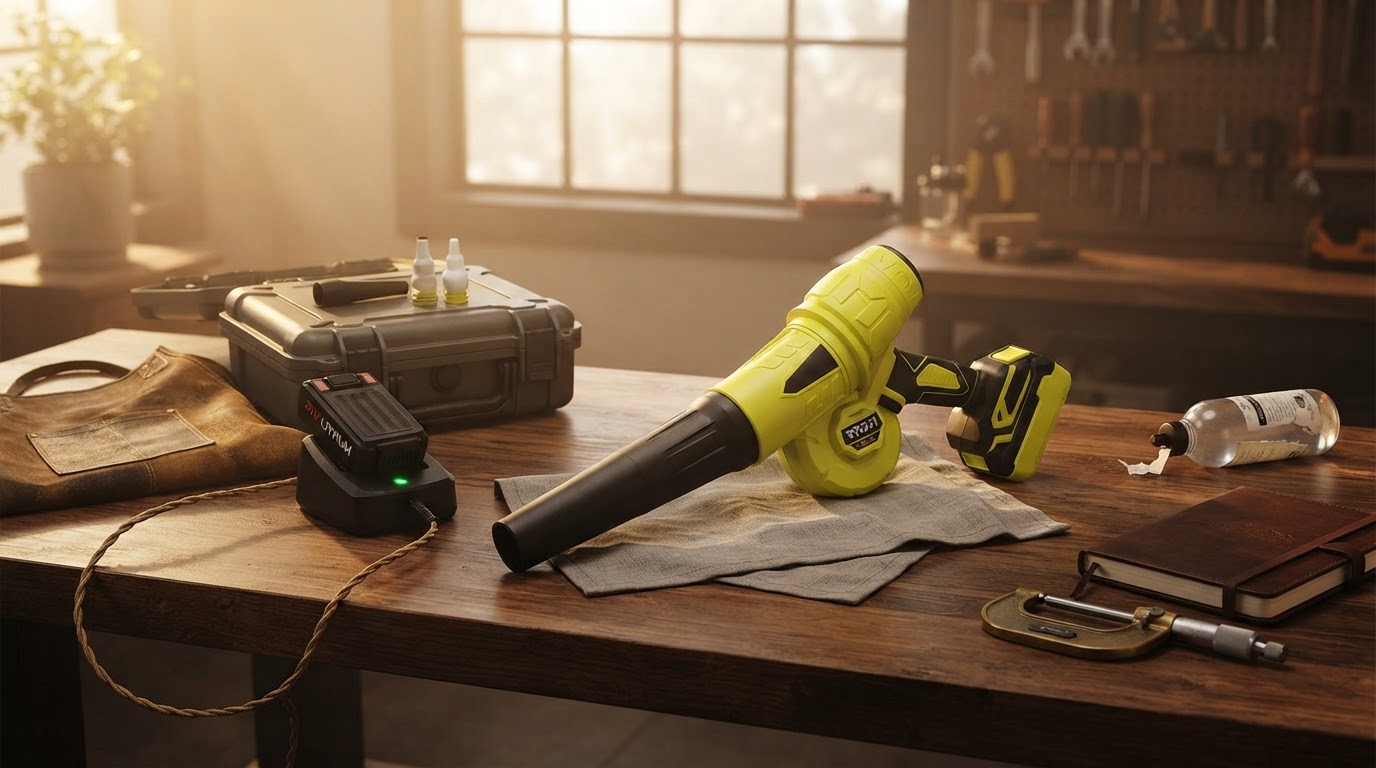
Jet Blower Efficiency vs Compressed Air Costs
 Maya ChenContributing Editor
September 22, 2026. This analysis evaluates the functional and economic differences between high-velocity electric blowers and standard aerosol compressed air. It is intended for consumers seeking to reduce recurring maintenance costs and chemical waste in technical environments.
The Hidden Inefficiency of Aerosol Cans
The conventional wisdom says that a three-dollar can of compressed air is the most accessible way to maintain sensitive hardware. However, this ignores the thermodynamic reality of aerosol discharge. According to Micro Center, electric dusters are fundamentally different from vacuum cleaners and traditional cans because they use a small motor to direct a continuous jet of air without the chemical propellants found in canned alternatives. When an aerosol can is used for more than a few seconds, the internal pressure drops and the temperature falls, often leading to liquid discharge or "freezing." This phenomenon, documented by users in the Low Voltage Nation community on Facebook, can result in chemicals, liquids, or ice being sprayed directly onto sensitive circuitry, which is the exact opposite of the intended goal. Furthermore, the longevity of these cans is a mathematical failure for frequent users. A standard 10-ounce can provides roughly 8 to 12 minutes of total discharge time before it becomes a hazardous waste product. In a professional setting, this creates a cycle of constant procurement and disposal that is rarely factored into the initial purchase price. The environmental impact of these fluorocarbon propellants is often dismissed, yet the recurring cost is the more immediate burden on the consumer. For those already using a cordless electric jet blower review to evaluate their options, the shift away from disposables is usually driven by these performance inconsistencies.
Mechanical Superiority of the Jet Blower
The Jet Blower operates on a principle of high-velocity air displacement rather than stored chemical pressure. According to Solvair, the primary technical distinction between compressors and blowers lies in the pressure ratio; while compressors focus on high-pressure storage, blowers prioritize the volume and velocity of air moved at a lower pressure ratio. For the consumer, this means the Jet Blower provides a consistent, non-tapering stream of air that does not lose force as the battery depletes, unlike a can that loses pressure as it cools. Run the math: a single Jet Blower unit replaces hundreds of aerosol cans over its lifecycle, eliminating the risk of liquid propellant damage entirely. This reliability is why the device is increasingly favored in diverse environments, such as when using a [jet blower for camping fire starter](/blog/jet-blower-for-camping-fire-starter) applications where consistent airflow is required in outdoor conditions. The motor in the Jet Blower generates a focused stream that is physically incapable of producing the "ice" effect seen in compressed air. This makes it safer for high-value electronics like GPUs and camera sensors. Even when compared to specialized tools like a super jet fan for camping burner, the industrial-grade motor in the Jet Blower offers a versatile utility that spans from the office desk to the campsite. The lack of chemical propellants also means the device is safe for use in enclosed spaces without ventilation concerns, a major drawback of traditional canned air that contains bitterants and volatile organic compounds.
The Procurement Decision Framework
Choosing between these two technologies requires looking past the shelf price and focusing on the total cost of ownership and safety margins. Here's the part nobody talks about: the true cost of "cheap" compressed air includes the risk of moisture damage and the logistical friction of constant replacement. When evaluating a transition to electric air displacement, consider these specific criteria to determine if the hardware justifies the switch:
- Frequency of use: If you clean electronics more than once a month, the ROI on an electric unit is typically reached within the first year.
- Sensitivity of equipment: For high-end PC builds or optical equipment, the zero-moisture guarantee of a blower is non-negotiable.
- Operational duration: Unlike cans that require "rest periods" to regain pressure, the Jet Blower offers continuous operation.
- Environmental constraints: Use in poorly ventilated rooms or around open flames, such as a jet blower for camping fire starter, mandates a chemical-free air source.
- Portability requirements: Consider if the internal battery capacity, often detailed in a cordless electric jet blower review, meets your off-grid needs.
- Long-term storage: Canned air can leak over time; a mechanical blower remains shelf-stable as long as the battery is maintained.
Sources
- Canned Air vs. Electric Air Duster (Which Blows Harder?) - YouTube
- Electric Dusters vs. Canned Air: A Key Upgrade for Cleaning Your PC
- What is the difference between Compressed Air & Air Blowers?