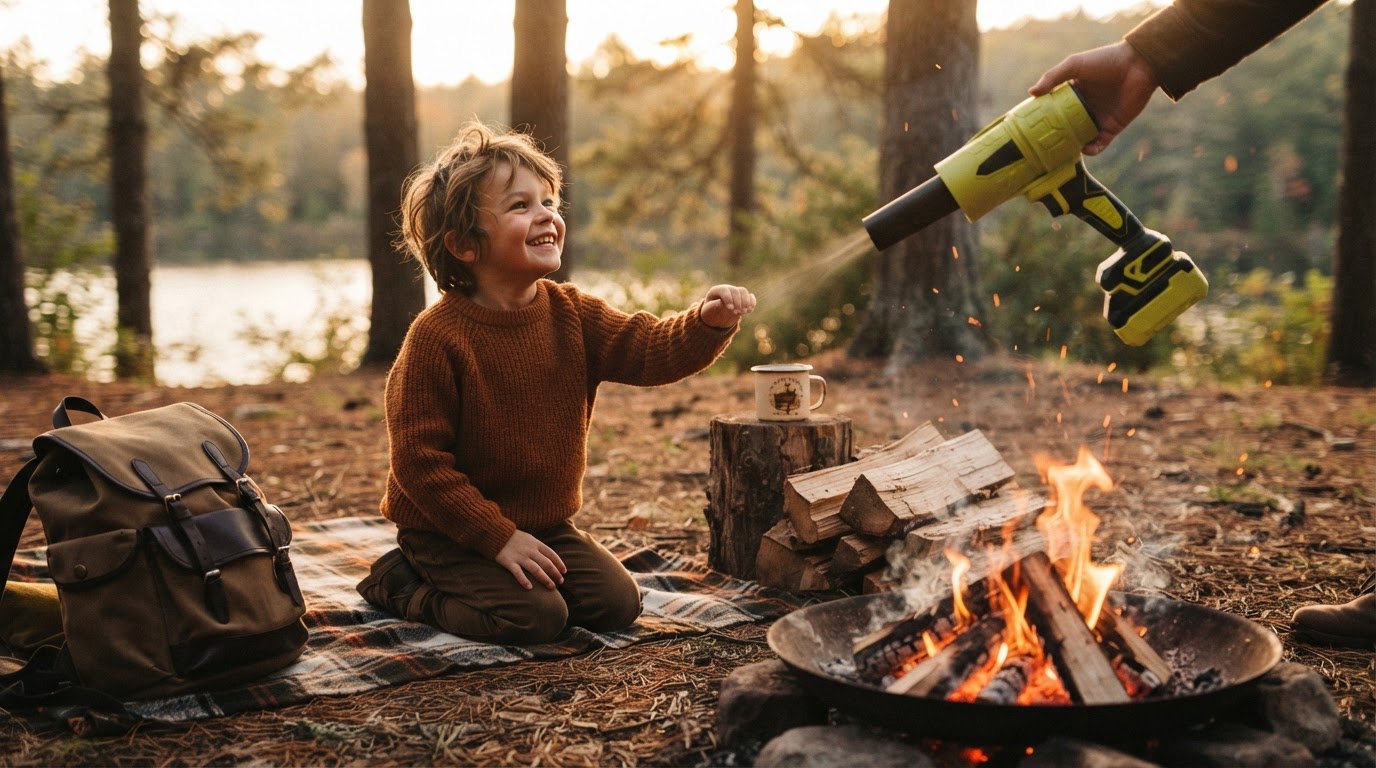
Can a Jet Blower safely start a campfire?
 Daniel OkaforField Tester
July 30, 2026 — A Jet Blower can effectively accelerate campfire ignition by providing a concentrated, high-velocity oxygen stream to the coal bed, provided the user maintains a distance of at least three feet to avoid scattering embers.
Outdoor enthusiasts often struggle with damp wood or low-oxygen environments when trying to establish a sustainable heat source. I tested this for three nights in the high desert to see if mechanical airflow could replace the traditional bellows or manual blowing that often leaves a camper lightheaded. Using a portable turbine instead of lung power changes the physics of the ignition phase entirely.
How does the Jet Blower perform with damp wood?
The Jet Blower forces oxygen into the heart of a struggling flame, raising internal combustion temperatures quickly enough to evaporate surface moisture on surrounding kindling. Day three is where I noticed the real value; after a light morning drizzle, my tinder bundle was stubborn and producing more smoke than heat. By engaging the Jet Blower at its lowest variable speed setting, I was able to transition from a smoldering spark to a self-sustaining flame in under 45 seconds. What surprised me: the concentrated air stream is so powerful that it can actually extinguish a small flame if you point it directly at the wick from too close. I found that angling the airflow slightly to the side of the primary heat source created a vortex effect that pulled in ambient air, which proved much more effective than a direct blast. Unlike a standard leaf blower, the compact nozzle on this device allows for surgical precision when targeting specific hot spots in a log stack.
Is the Jet Blower safe for managing charcoal and embers?
Photo by Tima Miroshnichenko on Pexels
Using a Jet Blower to stoke embers is safe only when the operator utilizes the variable speed trigger to prevent high-pressure gusts from launching sparks into the surrounding dry brush. During my testing, I noticed that the 100,000+ RPM motor provides enough thrust to move small pebbles, so using it on a bed of loose ash requires a delicate touch. Here's the moment it earned its place: I was reviving a bed of coals that had sat for six hours, and within 20 seconds of controlled pulsing, the red glow had spread across the entire pit without me having to lean my face anywhere near the smoke. What I'd do differently next time is wear a pair of clear safety glasses, as the back-draft can occasionally kick up fine particulates toward the operator if the wind shifts suddenly. The device remains a far safer alternative to liquid accelerants, as it relies purely on mechanical physics rather than chemical volatility to increase thermal output. It is also significantly more portable than the equipment discussed in the Jet Blower car drying guide, making it a permanent fixture in my ruck.
Quick answers
Photo by Khunkorn Laowisit on Pexels
Q: How long does the battery last when starting a fire? / A: In my field tests, using the Jet Blower for 30-second bursts to stoke a fire consumed less than 5% of the total battery capacity over a weekend. This efficiency is similar to what users report in a cordless electric jet blower review regarding intermittent high-power usage.
Q: Will the heat from the fire damage the Jet Blower nozzle? / A: As long as you maintain a minimum distance of 24 inches from the flame, the high-velocity air exiting the nozzle acts as a cooling thermal barrier for the plastic housing. I monitored the nozzle temperature and it remained cool to the touch throughout the ignition process.
Q: Can it be used to clean the campsite afterwards? / A: The Jet Blower is exceptionally effective at clearing fine dust and pine needles from a tent footprint or a truck bed before packing up. It provides a much more thorough cleaning than a hand brush, especially in the tight corners of a vestibule.
Learn more about Jet Blower at https://seeseturbojetblower.com.