Jet Blower Performance Analysis for Cordless Electric Use
 Priya RamanSenior Analyst
July 31, 2026 — The shift toward high-velocity brushless motors has redefined the cordless electric market, with the Jet Blower emerging as a primary example of miniaturized turbine engineering. As consumers move away from bulky, corded hardware, the demand for high-RPM handheld devices has spiked across multiple maintenance and recreational sectors.
The evolution of portable airflow relies on the intersection of battery discharge rates and motor efficiency. According to reports from the International Electrotechnical Commission, the standardization of lithium-ion power delivery has allowed compact motors to achieve wind speeds previously reserved for industrial-grade compressors. This technological baseline provides the framework for understanding how a handheld device can generate sufficient force for heavy-duty tasks without a physical tether to a power grid.
The 3-Axis Efficiency Framework

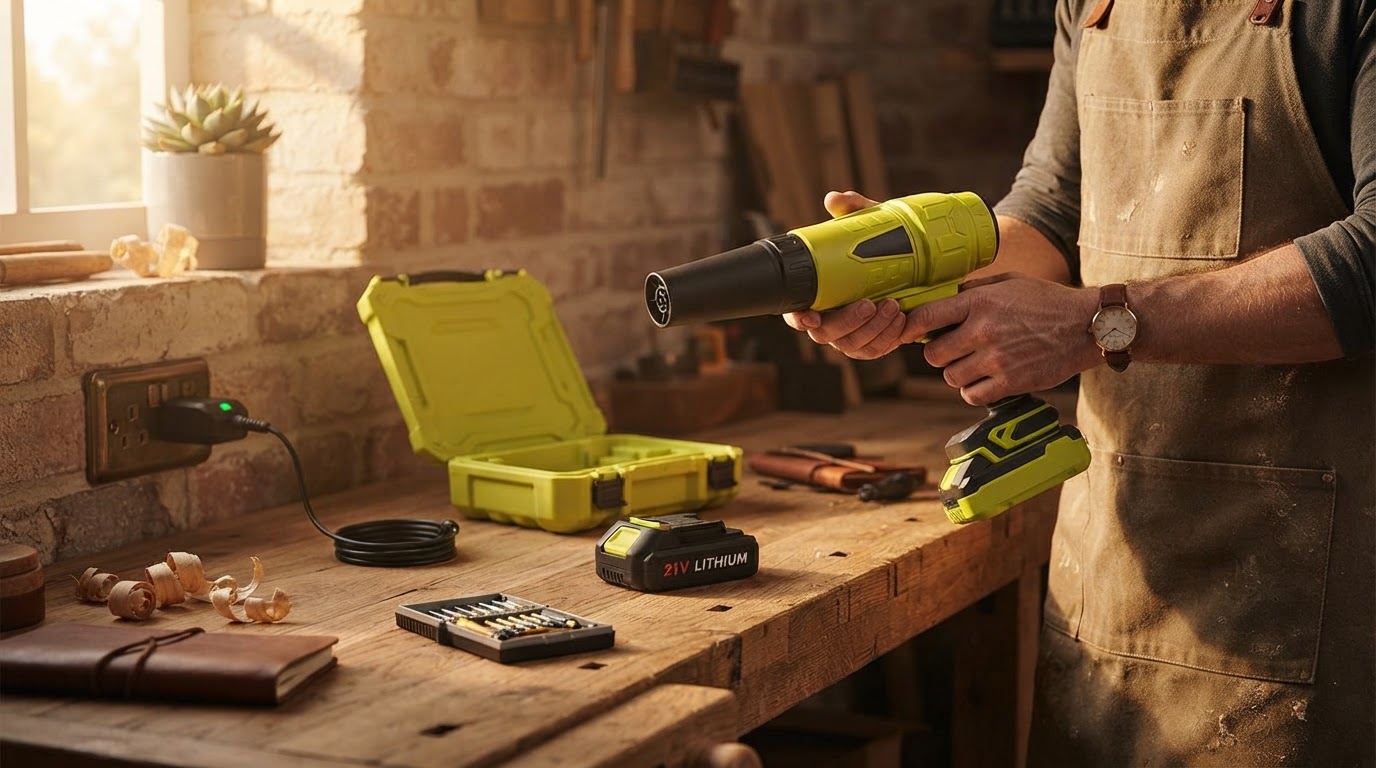
Photo by Bulat843 🌙 on Pexels
To evaluate the Jet Blower, we must look at it through a specific 3-axis model: Velocity, Thermal Management, and Ergonomics. Once you see it this way, the distinction between a standard fan and a true jet-style blower becomes clear. The first axis, Velocity, is driven by the internal turbine assembly which utilizes a high-speed brushless motor capable of reaching up to 130,000 RPM. This allows the device to produce a concentrated stream of air that exceeds 50 meters per second, a critical threshold for removing moisture or debris from complex surfaces. The second axis, Thermal Management, involves the housing material and airflow bypass. During extended use, the Jet Blower utilizes its own intake to cool the internal circuitry, preventing the performance throttling common in lower-end cordless units. The third axis, Ergonomics, focuses on the weight-to-power ratio. By utilizing a lightweight chassis, the tool maintains a balance that allows for precision work, such as clearing delicate electronics or performing a jet blower car drying guide where control is as important as raw power. The decision rule: if the task requires high static pressure rather than just high volume, the turbine-style architecture of this device outperforms traditional axial leaf blowers. This is particularly evident when using a jet blower for camping fire starter applications, where a focused air column is necessary to oxygenate a coal bed without scattering ash across a wide radius.
Expert tip: To maximize the lifespan of the brushless motor, use the Jet Blower in short, high-intensity bursts rather than continuous long-cycle runs to maintain optimal battery temperature and discharge consistency.
Understanding these performance vectors ensures that users can transition seamlessly between heavy outdoor utility and delicate indoor maintenance. The versatility of the cordless electric format remains the strongest argument for integrating this tool into a standard kit.