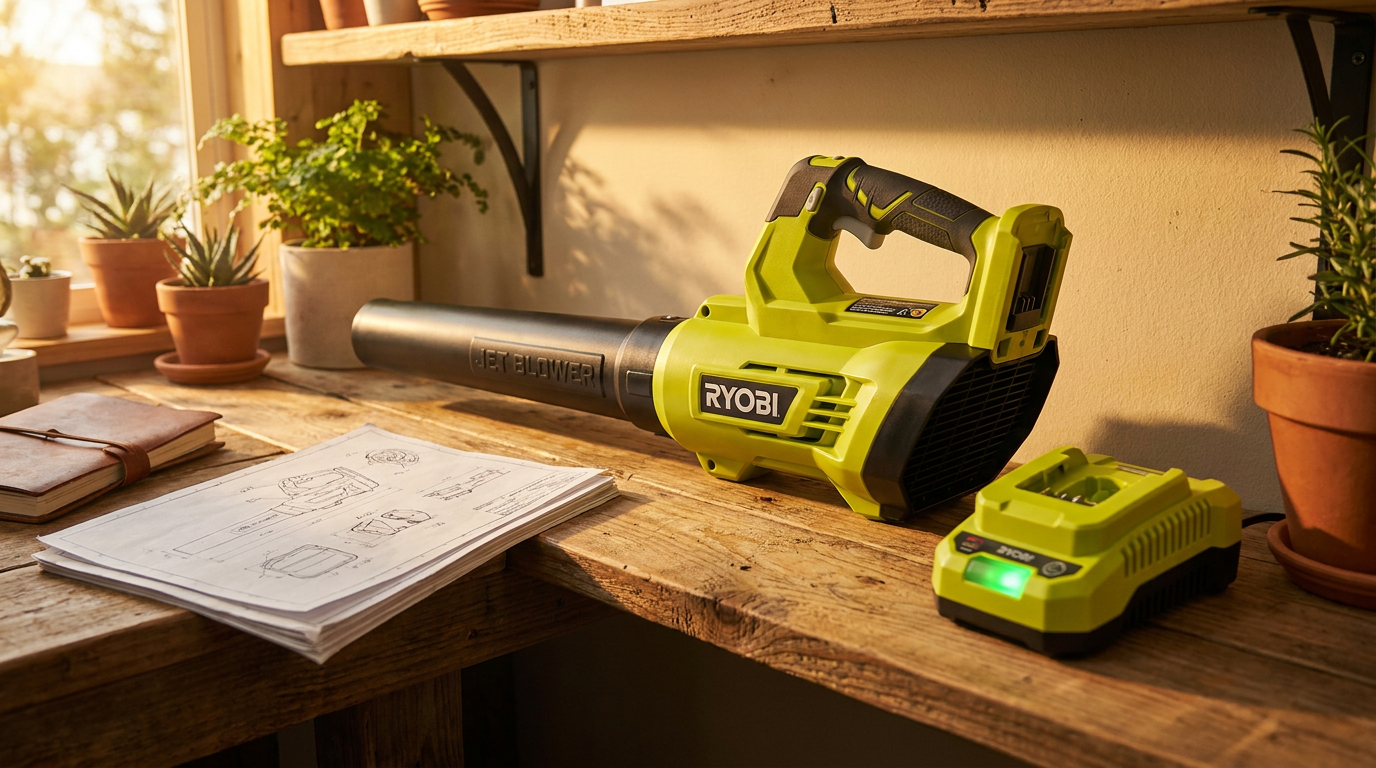
What are the Jet Blower brushless motor specifications?
 Maya ChenContributing Editor
June 26, 2026 — The Jet Blower architecture relies on high-speed brushless DC (BLDC) motors typically rated between 110,000 and 130,000 RPM to achieve meaningful static pressure for debris removal.
The conventional wisdom says that more blades always equal more power in a handheld blower. In reality, the efficiency of a high-speed jet fan is a delicate balance between motor KV ratings and the mass of the impeller. For professionals and enthusiasts looking at the Jet Blower platform, understanding the delta between hobbyist Electric Ducted Fan (EDF) units and industrial-grade blowers is essential for performance expectations.
How do KV ratings impact Jet Blower performance?
KV ratings dictate the theoretical RPM per volt, but they are often misinterpreted as a direct proxy for air volume. Run the math: a 13000KV inrunner brushless motor, as documented by AliExpress listings for high-speed jetfans, requires a sophisticated Electronic Speed Controller (ESC) to manage the heat generated at peak cycles. While a high KV rating allows for the blistering speeds associated with the Jet Blower, it necessitates a trade-off in torque. This is why these units excel at moving air at high velocities—often exceeding 50 m/s—but can struggle if the intake is even slightly obstructed. The motor must maintain a specific RPM range to prevent the ESC from overheating, a detail often omitted in basic marketing materials.
Why does the rotor material matter for high-speed fans?
Photo by Andrea Piacquadio on Pexels
Material integrity is the primary failure point for high-speed fans, as centrifugal forces at 100,000+ RPM can cause inferior plastics to deform or shatter. Here's the part nobody talks about: while many consumer units use injection-molded plastic, high-end EDF units like the E-Jets Jetfan 100mm utilize carbon fiber housings and multi-blade modular rotors to maintain structural rigidity. Fan Jets USA notes that these 11-blade modular rotors are designed for precision balance, which is critical because even a milligram of imbalance at Jet Blower speeds creates vibrations that will destroy the motor bearings within minutes. I'll change my mind about plastic housings when manufacturers provide long-term fatigue data at maximum throttle cycles exceeding 500 hours.
Quick answers

Photo by Quang Nguyen Vinh on Pexels
Q: What is the standard RPM range for a Jet Blower motor? A: Most high-speed brushless jet fans operate between 110,000 and 130,000 RPM. This speed is necessary to generate the air velocity required for drying or debris removal.
Q: How quickly can a jet fan transition between states? A: According to TxDOT special specifications for industrial jet fan assemblies, commercial-grade fans are often required to reverse airflow or reach full speed in 60 seconds or less. Handheld units like the Jet Blower achieve peak velocity much faster, often in under 2 seconds, due to lower rotational inertia.
Q: Are brushless motors better than brushed motors for these devices? A: Yes, because brushless motors eliminate the friction of physical brushes, allowing for the 13000KV speeds seen in high-end EDF units. This results in less heat and a significantly longer lifespan for the Jet Blower hardware.
Internal links for further reading include our technical analysis of jet-blower-battery-life, the jet-blower-vs-compressed-air comparison, and our jet-blower-maintenance-guide.
External source: E-Jets Jetfan 100mm EDF Unit - FAN JETS USA
Learn more about Jet Blower at https://seeseturbojetblower.com.