Is the Jet Blower safe for cleaning sensitive electronics?
 Priya RamanSenior Analyst
October 7, 2026 — The Jet Blower is safe for electronics when used at the appropriate speed setting, provided the user maintains a minimum distance of six inches from sensitive components to prevent static or mechanical stress.
Technicians and hardware enthusiasts often seek alternatives to chemical propellants that can leave residue on delicate circuitry. The decision to use a high-velocity air tool involves balancing cleaning efficiency against the risk of physical displacement. Once you see it this way, the Jet Blower becomes a precision instrument rather than a blunt force tool, offering a controlled environment for dust removal.
How does motor speed affect electronics safety?
The safety of a mini jet fan depends on the interplay between rotational speed and airflow dispersion. Two axes matter here: the velocity of the air leaving the nozzle and the static pressure exerted on the PCB (Printed Circuit Board). The Jet Blower utilizes a high-speed motor capable of reaching 130,000 RPM, which generates significant kinetic energy. According to specifications from Shop Mini Jet Fan Blower, the device features three adjustable speeds to mitigate risks. By selecting the lowest speed setting for initial passes, users can safely dislodge surface particles without the risk of over-spinning cooling fans or damaging surface-mount components. The decision rule is to always start at the lowest RPM and increase power only when addressing stubborn debris in non-critical areas like heatsink fins.
Why is the Jet Blower preferred over compressed air?
The Jet Blower offers a more sustainable and safer alternative to aerosol cans because it eliminates the risk of liquid propellant discharge. Think of it as a matrix of cost-efficiency versus hardware longevity; while compressed air cans are inexpensive upfront, they can spray freezing liquid if tilted, which induces thermal shock in silicon chips. A portable jet blower for pc cleaning provides a consistent stream of dry, ambient-temperature air. Data from eBay listings for similar high-RPM fans indicates that these devices, such as the Jet Dry Mini Blower, can reach up to 450,000 RPM in extreme configurations, though the standard 130,000 RPM of the Jet Blower is the industry sweet spot for balancing power and safety. This consistency ensures that no moisture is introduced into the system, which is a primary concern when maintaining PC hardware performance with Jet Blower technology.
Quick answers
Q: Can the Jet Blower damage my computer's cooling fans? A: If the Jet Blower is used at its maximum 130,000 RPM setting directly against a PC fan without securing the blades, it can cause the fan to over-spin and damage the bearings. Always hold the fan blades stationary with a finger or a non-conductive tool during the cleaning process.
Q: Is there a risk of static discharge when using a mini jet fan? A: While the Jet Blower itself does not use chemical propellants that generate high static, the friction of air moving over plastic surfaces can create a charge. To ensure safety, maintain a distance of at least 15 centimeters (6 inches) and use the locking nozzle design for focused, stable airflow as recommended by Shop Mini Jet Fan Blower.
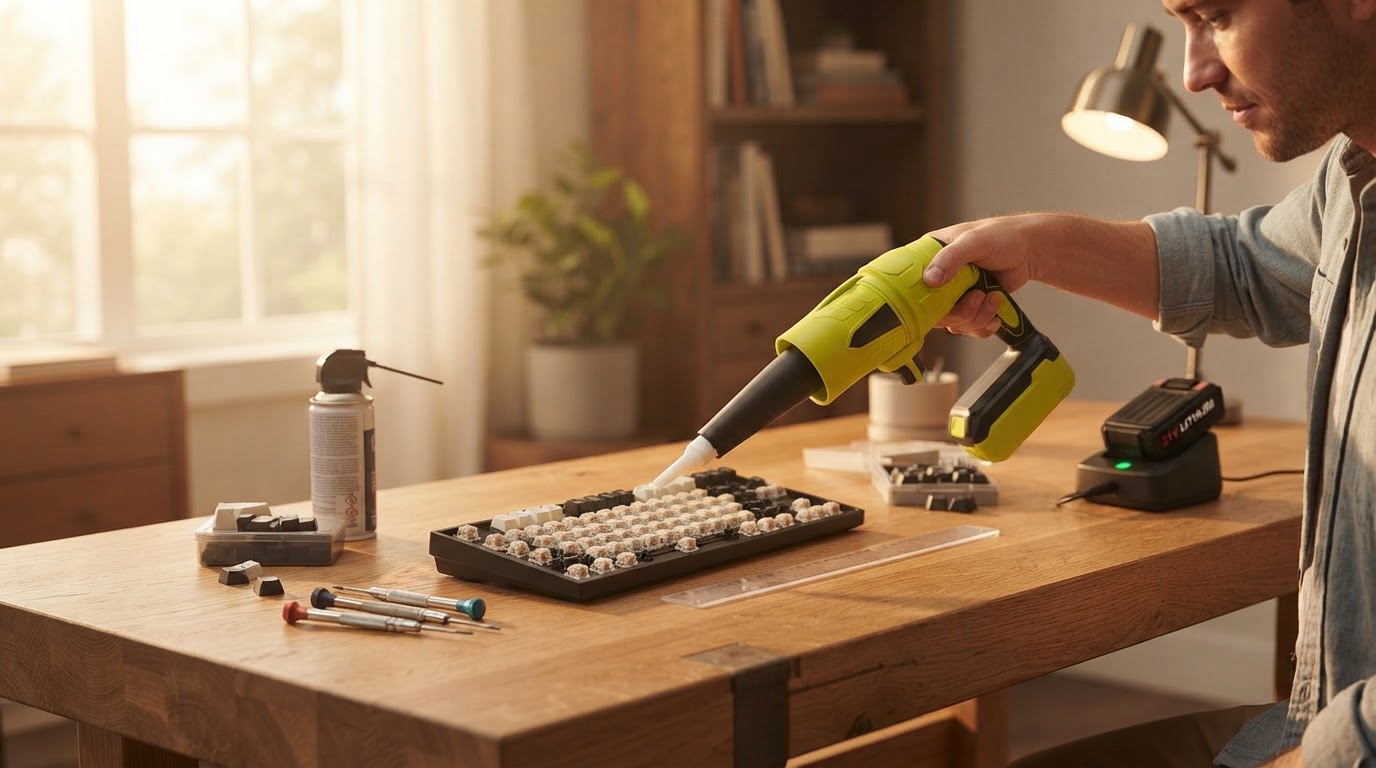
Q: How does the Jet Blower compare to traditional dusters for keyboards? A: Unlike compressed air, which loses pressure as the can cools, the Jet Blower maintains a constant 5.25-inch compact form factor and steady output. This makes it more effective for dislodging debris from under mechanical keycaps without the "icing" effect common in aerosol products, as detailed in the analysis of Jet Blower efficiency vs compressed air cans.
Q: What is the best way to clean a GPU with this device? A: When learning how to clean a PC using the Jet Blower cordless duster, you should use short bursts of air on the medium setting. This dislodges dust from the GPU shroud and heatsink without applying excessive force to the delicate PCIe connection or the silicon die.
Learn more about Jet Blower at https://seeseturbojetblower.com.